Jollof · West African

Jollof Rice

A classic jollof rice recipe: long-grain rice simmered in a fried tomato, red pepper and scotch bonnet base with thyme and curry, then steamed under foil.

By The JollyRoses Kitchen · Updated
Prep
20 min
Cook
1 hr 15 min
Total
1 hr 45 min
Serves
6
Non-veg Medium Main Course Includes 10 min hands-off
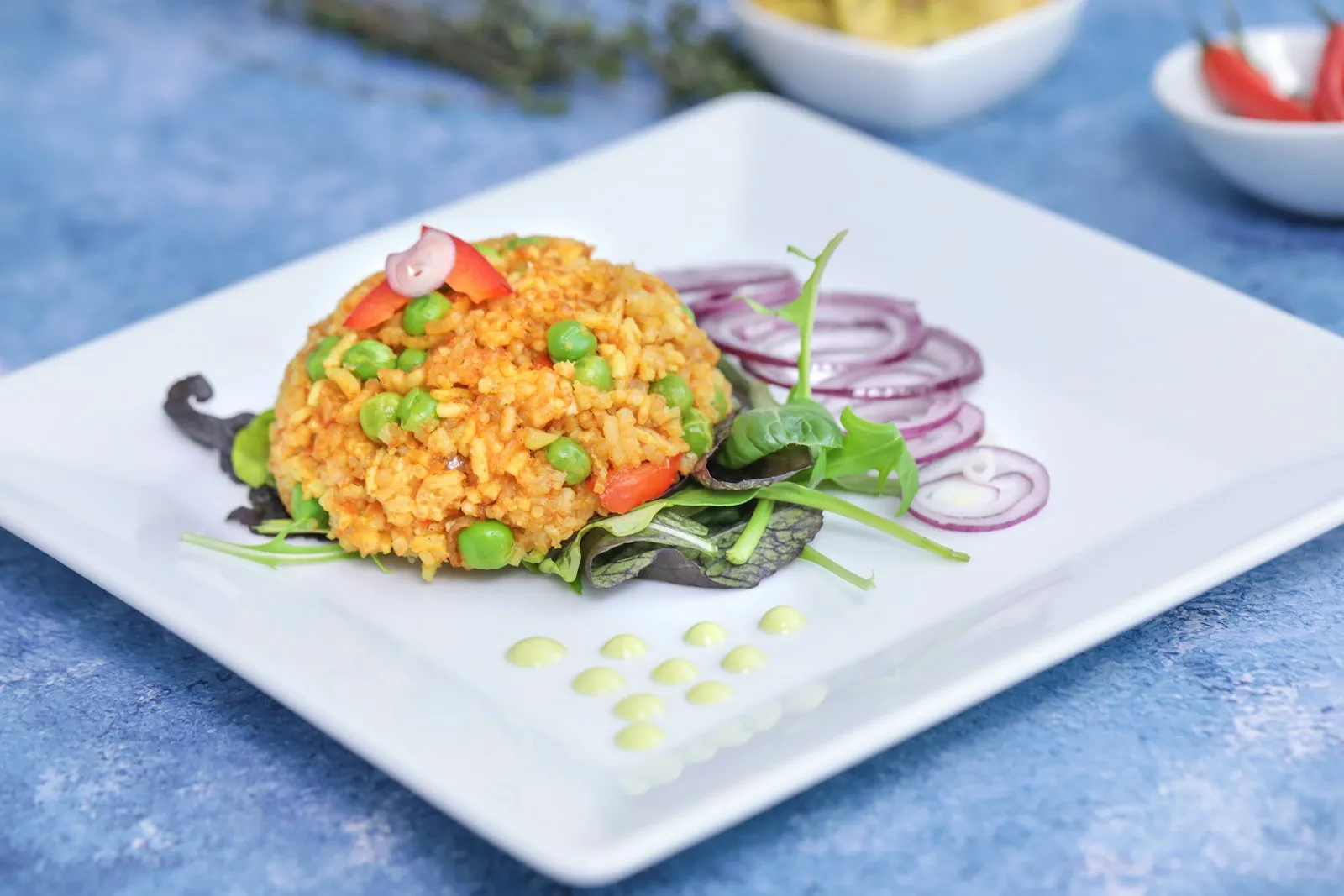
Mound of jollof rice with peas and red onion rings on a white square plate
Photo: Keesha's Kitchen on Unsplash

Jollof rice is a much-loved West African one-pot rice dish: long-grain rice cooked directly in a rich, well-fried base of blended tomatoes, red bell peppers, scotch bonnet and onion, seasoned with thyme, bay leaf and curry powder. Every grain ends up red, separate and full of flavor.

Good jollof comes down to three things: frying the tomato base until it is thick and sweet, adding just enough liquid for the rice, and steaming it gently under foil on low heat. This recipe walks through each stage so you get tender, fluffy rice that is neither mushy nor burnt.

Why this recipe works

  • The tomato paste and blended pepper base are fried until the oil rises to the top, which removes the raw, sour tomato taste and gives jollof its deep color.
  • Long-grain parboiled rice holds its shape through the long, slow steam, so the grains stay separate instead of turning to porridge.
  • Liquid is kept just level with the rice and topped up only if needed, the simplest way to avoid both soggy and undercooked jollof.
  • A layer of foil under the lid traps the steam, so the rice cooks evenly on low heat without constant stirring.

Jollof Rice recipe

By The JollyRoses Kitchen · 1 hr 45 min total · Medium

Ingredients

Servings 6

For the pepper base

For the jollof

Equipment

  • Large heavy-bottomed pot or Dutch oven (5–6 quart) with a lid
  • Blender
  • Aluminum foil
  • Wooden spoon or flat spatula
  • Fine-mesh strainer or bowl for rinsing rice

Instructions

  1. Prepare the rice and blend the base

    Rinse the rice in a bowl of cold water, rubbing gently and draining 3–4 times until the water runs mostly clear, then leave it to drain. Blend the tomatoes, red bell peppers, chopped onion and scotch bonnet until completely smooth. Add a splash of water only if the blender needs help; the less water, the faster the base reduces.

  2. Soften the onion

    Heat the oil in the heavy pot over medium heat. Add the sliced onion and cook, stirring, until soft and just turning golden at the edges, 3–4 minutes.

  3. Fry the tomato paste

    Add the tomato paste and stir it into the oil. Fry, stirring often and scraping the bottom, until it darkens from bright red to a deeper brick red and smells sweet rather than sharp, 5–6 minutes. Lower the heat slightly if it starts to catch.

  4. Cook down the pepper base

    Pour in the blended pepper mixture, stir well and bring to a lively simmer. Cook uncovered, stirring every few minutes, until it has reduced by about half, looks thick and glossy, and a layer of red oil floats on top, 20–25 minutes. This step builds most of the flavor, so do not rush it; a base that still tastes sour or watery will give sour, soggy rice.

  5. Season the base

    Stir in the curry powder, thyme, bay leaves, crumbled bouillon, salt and pepper and fry for 1 minute. Add the warm stock, stir and simmer for 3–4 minutes. Taste: the liquid should be slightly saltier than you would like the finished rice to be, because the rice will absorb it.

  6. Add the rice and check the liquid

    Add the drained rice and stir once so it is evenly coated. Level the surface. The liquid should sit just level with the top of the rice, barely covering it. If the rice is sitting above the liquid, add a little of the hot water; if it is swimming, simmer uncovered for a few minutes before covering. Bring back to a simmer, about 3 minutes.

  7. Cover with foil and steam

    Lay a sheet of foil directly over the pot, press it down around the rim, then put the lid on. Turn the heat to low and cook undisturbed for 20 minutes.

  8. Fold and finish

    Uncover and gently fold the rice from the bottom to the top with a flat spatula so the top and bottom cook evenly. If the rice is still firm and the pot looks dry, sprinkle ¼ cup of hot water around the edges. Re-cover with the foil and lid and cook on low for 10–15 minutes more, until the grains are tender with no hard center. Dot with the butter, if using.

  9. Rest and serve

    Turn off the heat and leave the pot covered for 10 minutes so the rice firms up and separates. Remove the bay leaves, fluff gently with a fork and serve.

Tips for the best jollof rice

  • Fry the base until the oil separates and floats on top. An undercooked tomato base is a common cause of sour, pale jollof.
  • Rinse the rice well. Washing off surface starch helps keep parboiled rice in separate grains rather than clumping together.
  • Add liquid in stages. It is easy to add a little more hot water to firm rice, but impossible to rescue rice that has absorbed too much.
  • Keep the heat low once the pot is covered, and fold instead of stirring. Frequent stirring breaks the grains and makes them sticky, while high heat burns the bottom before the top cooks.
  • A thin, lightly toasted layer at the bottom of the pot is prized by many cooks, but it should smell toasty, not bitter. If you smell burning, turn the heat down immediately.

Substitutions

Fresh plum tomatoesOne 14.5-oz (411 g) can of whole or diced tomatoes, drained of excess juice.
Chicken stockVegetable stock and vegetable bouillon to make the dish vegetarian.
Long-grain parboiled riceRegular long-grain white rice; use about ½ cup less stock and start checking 5 minutes earlier.
Scotch bonnetHabanero, which has a similar fruity heat, or ¼–½ tsp cayenne for a milder version.

Storing and reheating

Cool and refrigerate leftovers in an airtight container within 1 hour of cooking (never more than 2 hours) and eat within 3–4 days, or freeze for up to 3 months. Reheat covered, with a splash of water, in the microwave or in a covered pan over low heat until steaming hot throughout.

What to serve with jollof rice

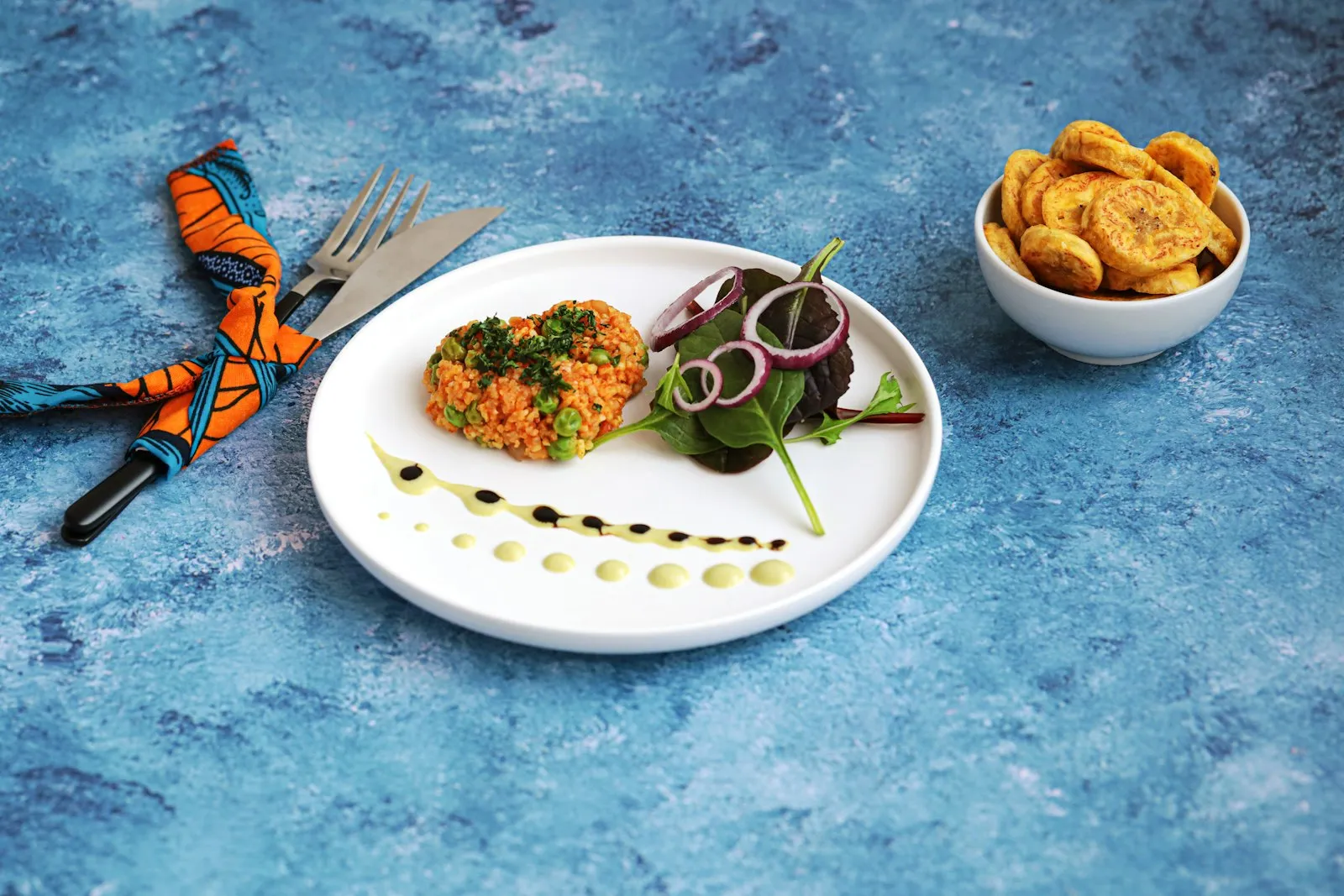
  • Fried sweet plantains
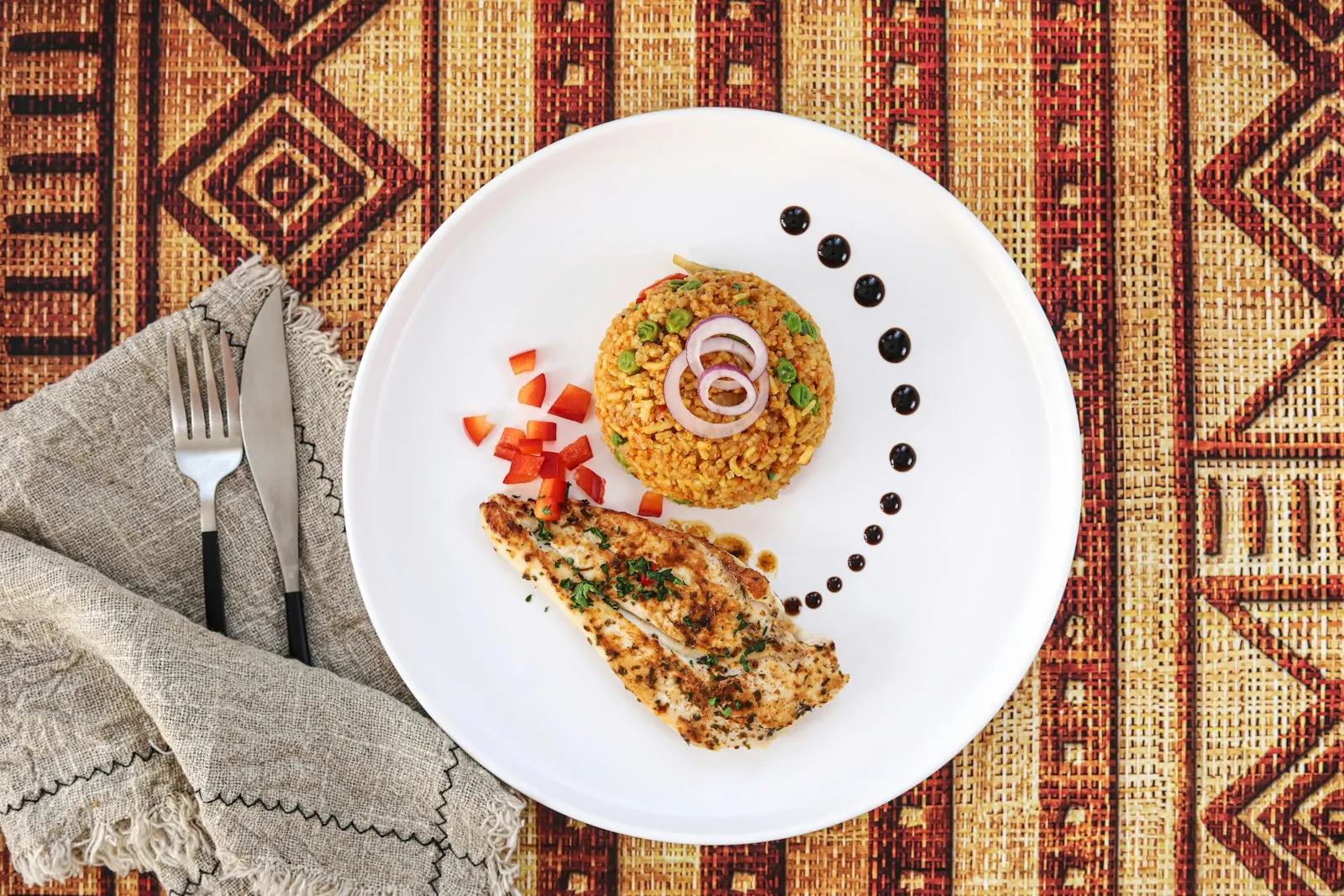
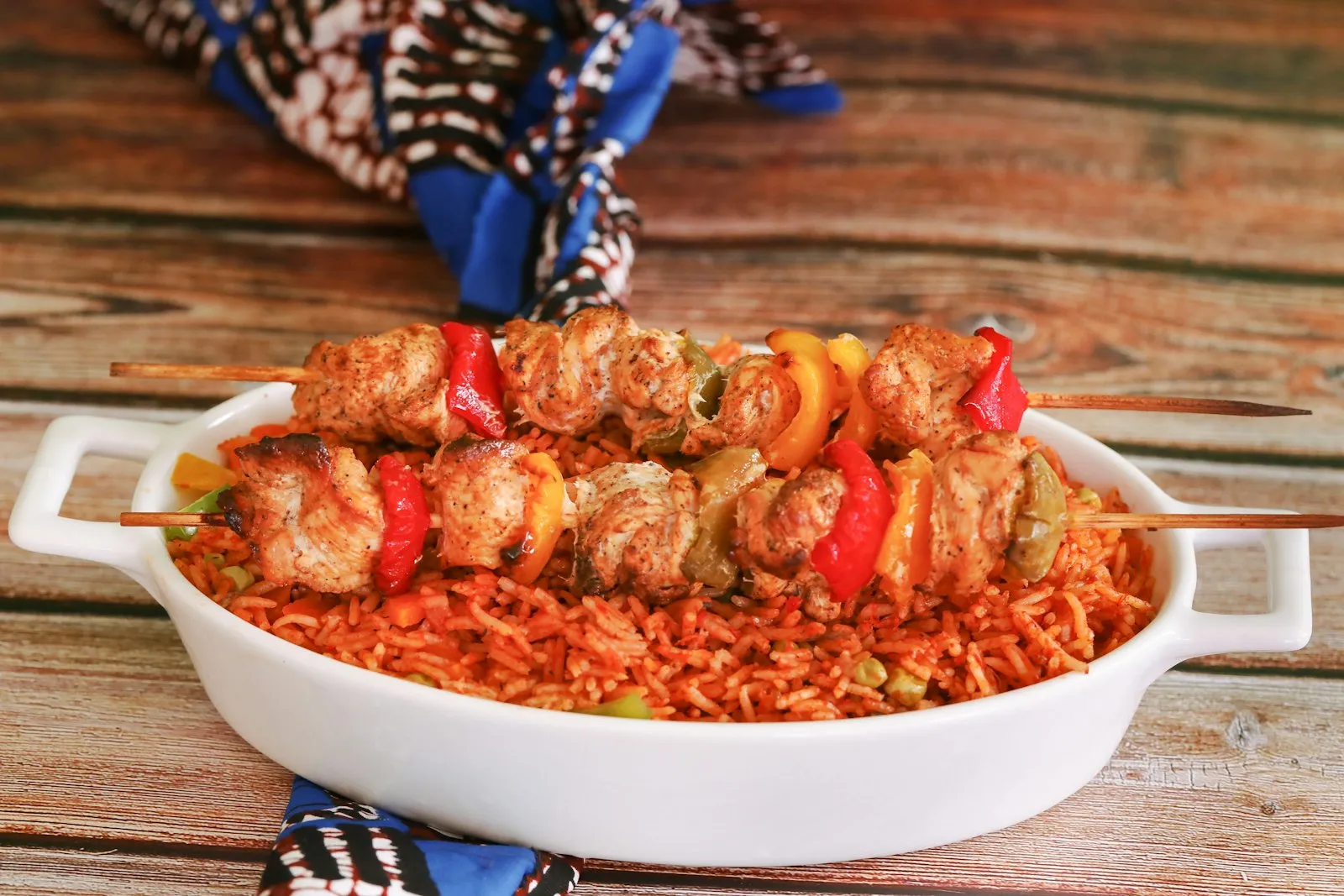
  • Grilled or fried chicken
  • Coleslaw or a simple green salad
  • Moi moi (steamed bean pudding)

Frequently asked questions

What rice is best for jollof rice?
Long-grain parboiled rice is the most common choice because it holds its shape through the long cooking time and stays in separate grains. Long-grain white rice, basmati and jasmine also work, but they cook faster and need less liquid.
Why is my jollof rice mushy?
Usually too much liquid, too much stirring, or rice that was not rinsed. Keep the liquid just level with the rice, add more only if the grains are still hard, and fold gently once rather than stirring.
Why is my jollof rice still hard after cooking?
The liquid ran out before the rice softened, or steam escaped. Sprinkle a few tablespoons of hot water around the edges, re-cover tightly with foil and the lid, and cook on low for another 10 minutes.
How do I get jollof rice red and not orange?
Use ripe red tomatoes and red bell peppers, and fry the tomato paste and blended base long enough to darken and reduce. A watery, undercooked base gives a paler, orange color and a sharper taste.
What is the difference between Nigerian and Ghanaian jollof rice?
Nigerian jollof is usually made with long-grain parboiled rice and is often cooked to develop a smoky bottom-of-the-pot flavor. Ghanaian jollof commonly uses fragrant jasmine or basmati rice and more ginger and garlic, and sometimes includes mixed vegetables.

Rate this recipe

Made it? Tap a star to rate — no sign-up needed.

Reviews

No reviews yet.

Sign in to write a review and share a photo of your jollof rice.

You might also like

All jollof