Biryani · Indian

Chicken Biryani

A step-by-step chicken biryani recipe: spiced yogurt-marinated chicken layered with fragrant basmati rice, fried onions and saffron, then slow-steamed.

By The JollyRoses Kitchen · Updated
Prep
30 min
Cook
1 hr 15 min
Total
2 hr 45 min
Serves
5
Non-veg Medium Main Course Includes 1 hr hands-off
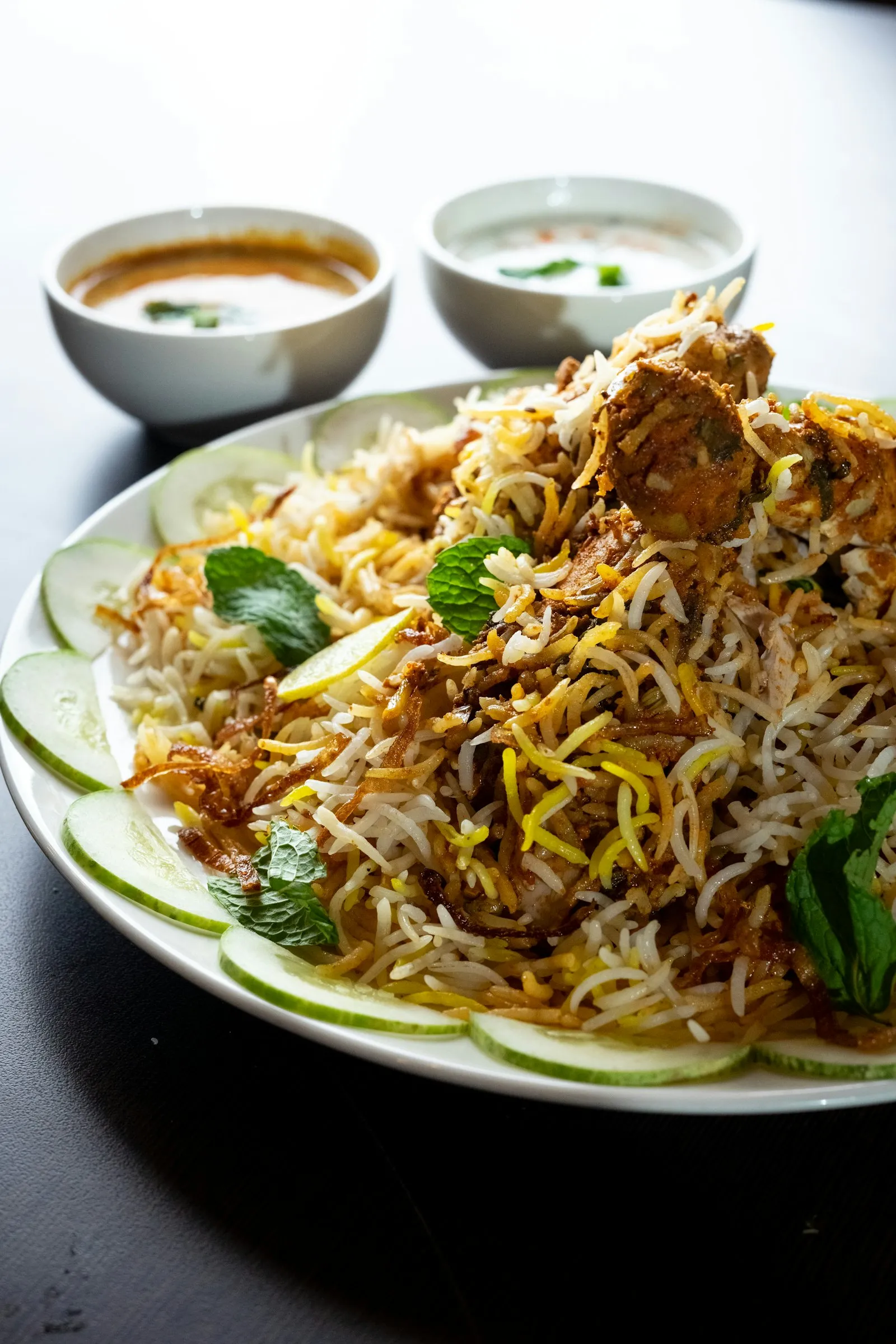
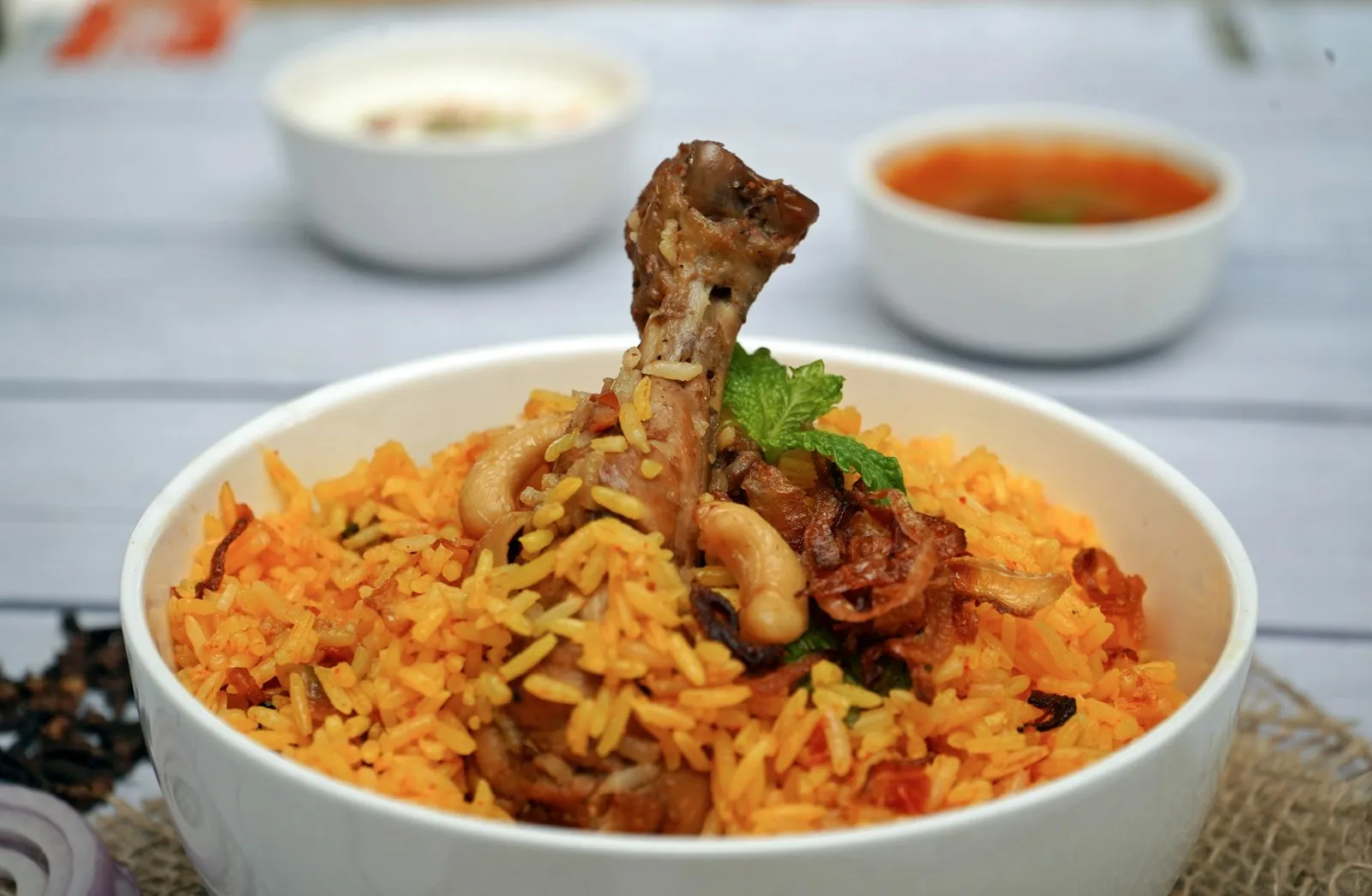
Bowl of saffron-orange biryani rice topped with a chicken leg, with small bowls of raita and curry behind
Photo: Mario Raj on Unsplash

This is the classic layered chicken biryani: chicken is marinated in yogurt and spices, cooked into a thick masala, then covered with partly cooked basmati rice and sealed so the two finish together in their own steam (the "dum").

The method is broken into four clear stages — fry the onions, marinate and cook the chicken, par-boil the rice, then layer and steam — so it is very manageable in a home kitchen, even the first time.

Why this recipe works

  • Rice is cooked to about 70% before layering, so every grain finishes separate and fluffy instead of mushy.
  • Deeply browned onions (birista) go both into the marinade and on top, giving the sweet, savory depth biryani is known for.
  • A tight seal and very low heat for the final steam let the rice absorb the chicken's aroma without scorching the bottom.

Chicken Biryani recipe

By The JollyRoses Kitchen · 2 hr 45 min total · Medium

Ingredients

Servings 5

For the rice

For the chicken marinade

For the fried onions and layering

Equipment

  • Large heavy-bottomed pot or Dutch oven (5–6 quart) with a tight lid
  • Large saucepan for boiling rice
  • Colander
  • Aluminum foil (to seal the lid)
  • Flat griddle or cast-iron pan (heat diffuser for the final steam)
  • Instant-read thermometer

Instructions

  1. Soak the rice

    Rinse the basmati in a bowl of cold water, swirling and draining 3–4 times until the water is nearly clear. Cover with fresh water and soak for 30 minutes. Meanwhile, stir the saffron into the warm milk and set aside.

  2. Fry the onions (birista)

    Heat the oil in the heavy pot over medium heat. Add the sliced onions and cook, stirring every minute or two, until deep golden brown, 15–20 minutes. Lower the heat as they darken so they brown evenly without burning. Lift out with a slotted spoon onto a paper towel; leave the flavored oil in the pot.

  3. Marinate the chicken

    In a large bowl combine the yogurt, ginger-garlic paste, chili powder, turmeric, garam masala, coriander, salt, lemon juice and green chilies. Add the chicken, half the fried onions (crushed with your hand), and half each of the mint and cilantro. Mix well, cover and refrigerate for at least 1 hour (up to overnight).

  4. Cook the chicken masala

    Reheat the onion oil in the pot over medium heat. Add the chicken with all of its marinade. Cook, stirring occasionally, until the chicken is almost cooked through and the sauce has thickened and oil begins to separate at the edges, 18–22 minutes. You want a thick, clinging masala, not a runny curry. Taste and adjust salt. Turn off the heat.

  5. Par-boil the rice

    Bring the 10 cups of water to a rolling boil with the salt, bay leaf, cardamom, cloves, cinnamon and shahi jeera. Drain the soaked rice and add it. Boil uncovered for 5–6 minutes, until the grains are about 70% cooked: long, still firm, and they break with a small white core when pressed. Drain immediately in a colander (the whole spices can go in with the rice).

  6. Layer

    Spread the drained rice evenly over the chicken in the pot without pressing it down. Scatter the remaining fried onions, mint and cilantro over the top. Drizzle with the saffron milk in streaks and pour the melted ghee around the surface.

  7. Seal and steam (dum)

    Cover the pot tightly with foil, then press the lid on firmly. Cook over medium heat for 3–4 minutes until you hear sizzling, then set the pot on a flat griddle over the lowest heat and steam for 20–25 minutes.

  8. Rest and serve

    Turn off the heat and let the biryani rest, still sealed, for 10 minutes. Open the pot and check the thickest piece of chicken with an instant-read thermometer, away from the bone: it should read 165°F / 74°C. If it doesn't, reseal and steam on low for 5–10 minutes more. Serve by scooping down vertically with a wide spoon so each portion gets rice from the top and chicken from the bottom.

Tips for the best chicken biryani

  • Use aged basmati. It is drier, cooks up fluffier and stays in long, separate grains; newer rice breaks and turns sticky more easily.
  • Salt the rice water generously. The rice only gets seasoned while boiling, and under-salted rice is a common reason a biryani tastes flat.
  • Stop boiling the rice early. If a grain mashes completely between your fingers, it has gone too far and will turn mushy during the steam.
  • Keep the chicken masala thick before layering. Excess liquid turns the bottom layer of rice soggy.
  • The griddle under the pot spreads the heat so the bottom doesn't scorch during the final steam.

Substitutions

Bone-in chickenBoneless thighs cut into 2-inch pieces; reduce the masala cooking time by about 5 minutes.
GheeUnsalted butter or more neutral oil.
Homemade fried onionsStore-bought crispy fried onions (about 1½ cups) to save 20 minutes.
SaffronA pinch of turmeric dissolved in the warm milk for color; the aroma will be milder.

Storing and reheating

Refrigerate leftovers in an airtight container within 2 hours of cooking and eat within 3 days. Reheat covered, with a sprinkle of water, in the microwave or in a covered pan over low heat until steaming hot throughout.

What to serve with chicken biryani

Frequently asked questions

How do I keep biryani rice from getting mushy?
Soak the rice for 30 minutes, boil it in plenty of well-salted water only until about 70% cooked, and drain it immediately. Keep the chicken masala thick, and don't stir the pot during the final steam.
Can I make chicken biryani ahead of time?
Yes. You can marinate the chicken up to a day ahead in the fridge, and fry the onions a day or two ahead and keep them airtight. Fully cooked biryani also reheats well, covered, with a sprinkle of water.
What is dum in biryani?
Dum means slow-cooking in a sealed pot. The rice and chicken finish cooking together in trapped steam over very low heat, so the rice absorbs the aroma of the masala, saffron and ghee.
Which rice is best for biryani?
Long-grain aged basmati is the standard choice. It cooks into long, separate, fragrant grains, which is what gives biryani its characteristic texture.
Can I use boneless chicken for biryani?
Yes. Use boneless thighs rather than breast so the meat stays juicy, and shorten the masala cooking time by about 5 minutes.

Rate this recipe

Made it? Tap a star to rate — no sign-up needed.

Reviews

No reviews yet.

Sign in to write a review and share a photo of your chicken biryani.

You might also like

All biryani