Biryani · Indian

Vegetable Biryani

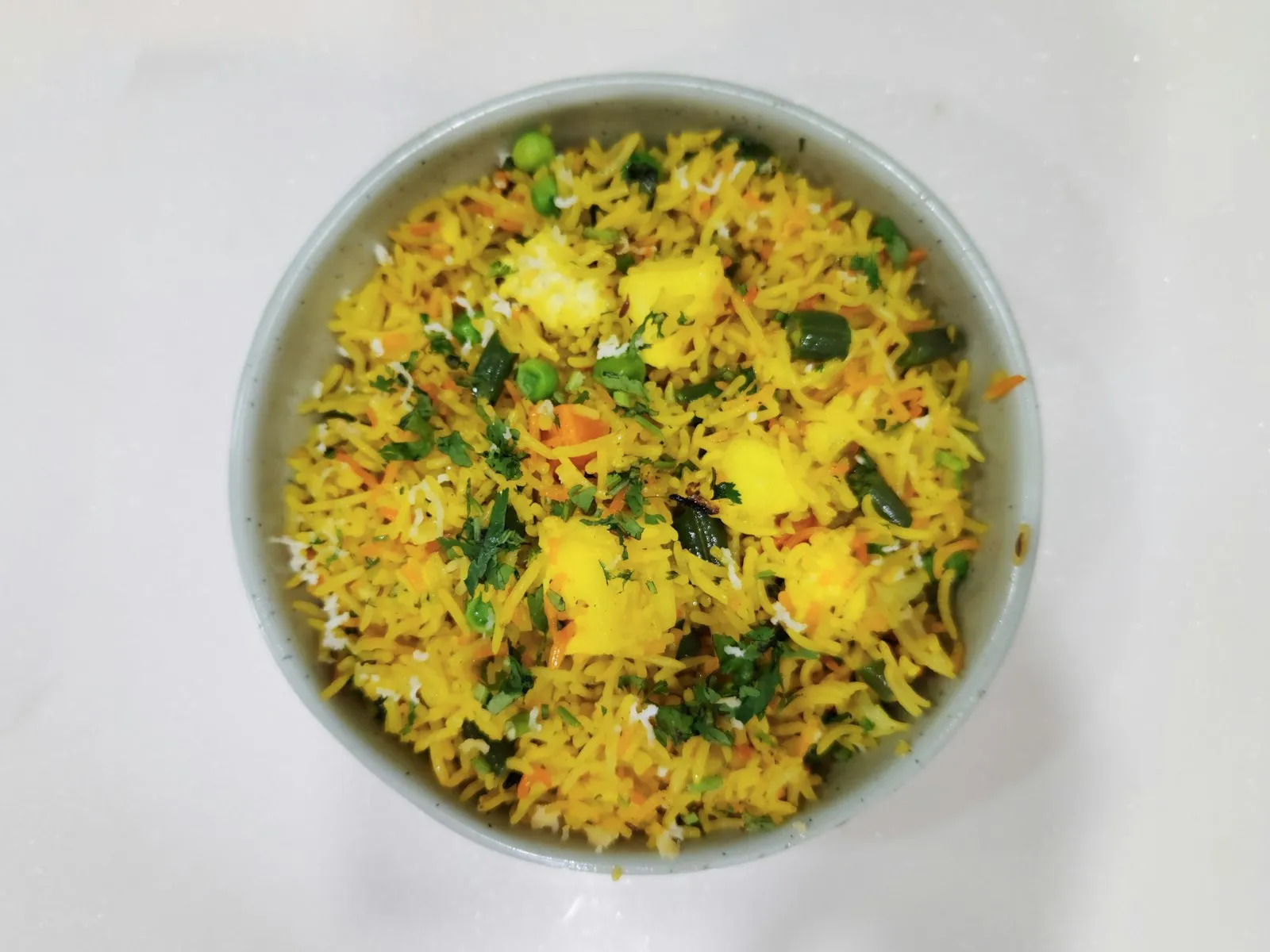
A vegetable biryani with potatoes, carrots, beans, peas and cauliflower in a spiced yogurt masala, layered with saffron basmati rice and steamed on dum.

By The JollyRoses Kitchen · Updated
Prep
30 min
Cook
1 hr 15 min
Total
2 hr 15 min
Serves
5
Vegetarian Medium Main Course Includes 30 min hands-off
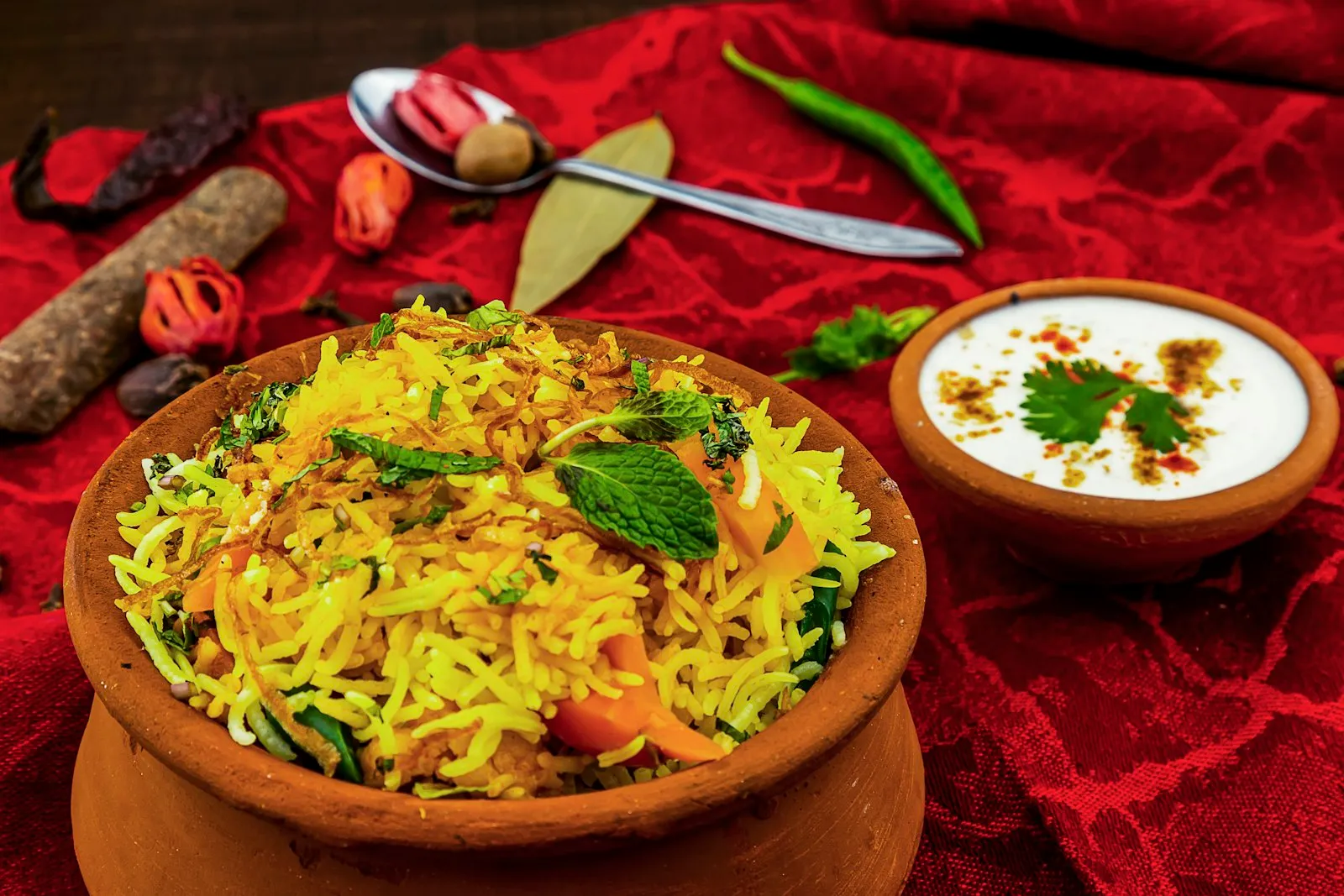
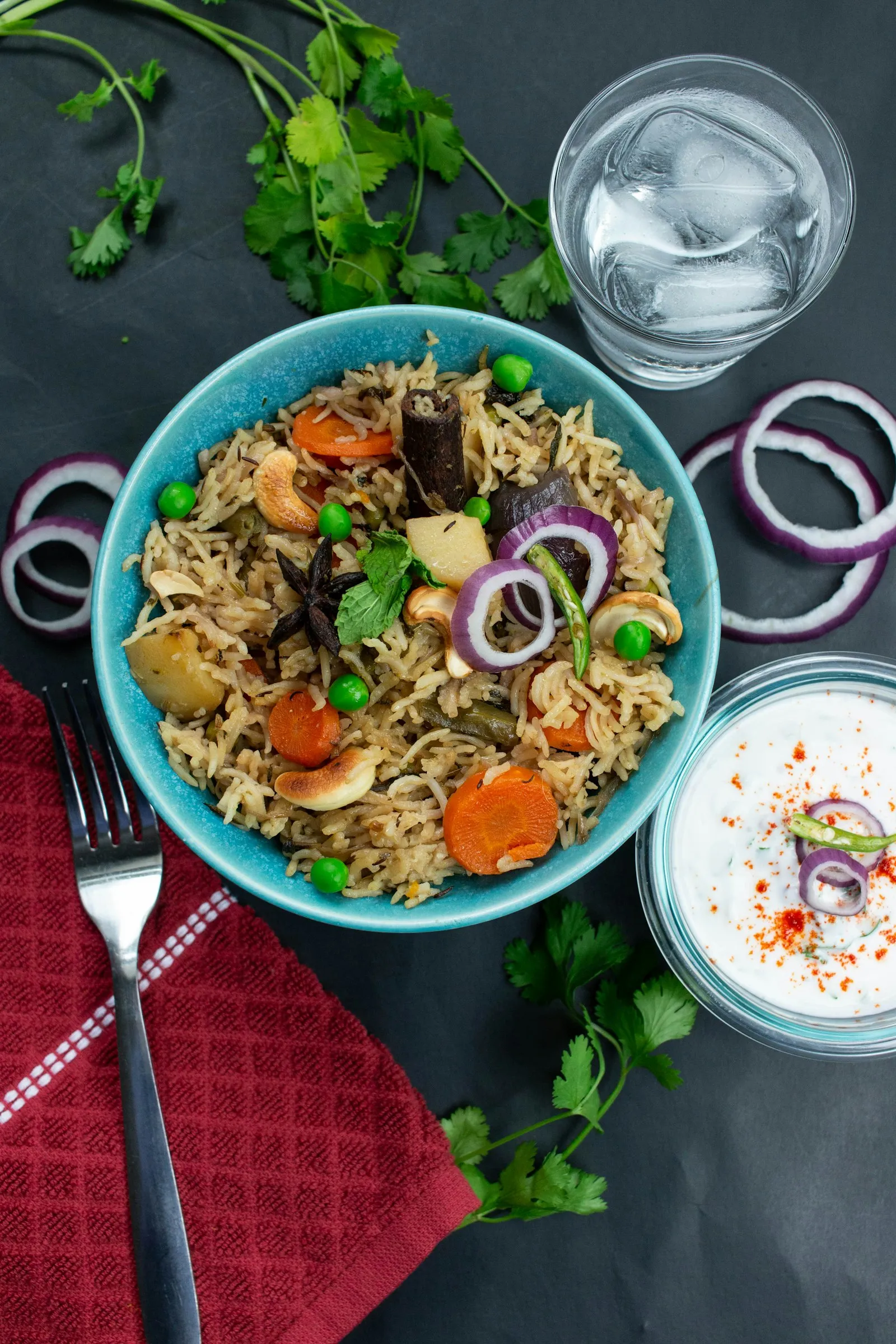
Blue bowl of vegetable biryani with peas and fried onions, served with onion rings and a bowl of yogurt
Photo: Kalyani Akella on Unsplash

This vegetable biryani layers a thick, spiced yogurt masala of potatoes, carrots, green beans, peas and cauliflower under fragrant basmati rice, then seals the pot so everything finishes together in its own steam (the "dum").

It follows the same four stages as a meat biryani — fry the onions, cook the vegetable masala, par-boil the rice, then layer and steam — so this veg biryani has real depth rather than tasting like spiced rice with vegetables stirred in.

Why this recipe works

  • Vegetables are cut to similar sizes and cooked only until nearly tender, so they hold their shape through the final steam.
  • Yogurt and deeply browned onions give the masala body and a gentle tang, standing in for the richness meat would bring.
  • Rice is boiled to about 70% and finished on very low heat, so the grains stay long and separate on top of a moist vegetable layer.

Vegetable Biryani recipe

By The JollyRoses Kitchen · 2 hr 15 min total · Medium

Ingredients

Servings 5

For the rice

For the vegetable masala

For the fried onions and layering

Equipment

  • Large heavy-bottomed pot or Dutch oven (5–6 quart) with a tight lid
  • Large saucepan for boiling rice
  • Colander
  • Aluminum foil (to seal the lid)
  • Flat griddle or cast-iron pan (heat diffuser for the final steam)

Instructions

  1. Soak the rice

    Rinse the basmati in a bowl of cold water, swirling and draining 3–4 times until the water is nearly clear. Cover with fresh water and soak for 30 minutes. Stir the saffron into the warm milk and set aside.

  2. Fry the onions (birista)

    Heat the oil in the heavy pot over medium heat. Add the sliced onions and cook, stirring every minute or two, until deep golden brown, 15–20 minutes, lowering the heat as they darken. Lift out onto a paper towel with a slotted spoon. Pour off all but about 2 tablespoons of the onion oil and keep the rest for another use.

  3. Build the masala base

    Add the 2 tablespoons of ghee to the onion oil in the pot over medium heat. Add the bay leaf, cinnamon, cardamom, cloves and cumin seeds and let them sizzle for 30 seconds. Stir in the ginger-garlic paste and green chilies and cook for 1 minute, until the raw smell is gone. Add the tomato, chili powder, turmeric, coriander, garam masala and salt, and cook until the tomato breaks down and the oil starts to separate, 4–5 minutes.

  4. Cook the vegetables

    Lower the heat and stir in the yogurt a spoonful at a time so it doesn't split. Add the potato, carrots, green beans and cauliflower, half the fried onions (crushed with your hand) and half each of the mint and cilantro. Add the ¼ cup water, cover and cook on medium-low for 10–12 minutes, until the potatoes are just tender when pierced but not falling apart. Stir in the peas. The masala should be thick and clinging; if it's watery, simmer uncovered for a few minutes. Taste and adjust salt, then turn off the heat.

  5. Par-boil the rice

    Bring the 10 cups of water to a rolling boil with the salt, bay leaf, cardamom, cloves and shahi jeera. Drain the soaked rice and add it. Boil uncovered for 5–6 minutes, until the grains are about 70% cooked: long, still firm, with a small white core when pressed. Drain immediately.

  6. Layer

    Smooth the vegetable masala into an even layer. Spread the drained rice over it without pressing down. Scatter the remaining fried onions, mint and cilantro on top, drizzle the saffron milk in streaks and pour the melted ghee around the surface.

  7. Seal and steam (dum)

    Cover the pot tightly with foil, then press the lid on firmly. Cook over medium heat for 3–4 minutes until you hear sizzling, then set the pot on a flat griddle over the lowest heat and steam for 20 minutes.

  8. Rest and serve

    Turn off the heat and let the biryani rest, still sealed, for 10 minutes. Open and serve by scooping down vertically with a wide spoon so each portion gets rice from the top and vegetables from the bottom.

Tips for the best vegetable biryani

  • Cut the potatoes and carrots smaller than the softer vegetables. They take the longest to cook, so smaller pieces let everything turn tender at the same time.
  • Stop the vegetables just short of fully cooked. They keep softening during the 20-minute steam, and overcooked cauliflower turns to mush.
  • Add yogurt off high heat and a little at a time. Hot, fast cooking makes it curdle into grainy specks.
  • Salt the rice water generously; it's the main chance the rice has to be seasoned.
  • Keep the masala thick before layering. Extra liquid turns the bottom layer of rice soggy.

Substitutions

Mixed vegetablesAny sturdy mix works: bell pepper, sweet corn or cubed paneer. Add paneer with the peas so it stays soft.
YogurtUnsweetened plain coconut or cashew yogurt, with oil instead of ghee, for a dairy-free version.
Homemade fried onionsStore-bought crispy fried onions (about 1½ cups); check the label if you need them gluten-free, as some are coated in flour.
SaffronA pinch of turmeric dissolved in the warm milk for color; the aroma will be milder.

Storing and reheating

Refrigerate leftovers in an airtight container within 2 hours of cooking and eat within 3–4 days. Reheat covered, with a sprinkle of water, in the microwave or in a covered pan over low heat until steaming hot throughout.

What to serve with vegetable biryani

Frequently asked questions

Which vegetables are best for vegetable biryani?
Potatoes, carrots, green beans, peas and cauliflower are the classic mix because they hold their shape during the long steam. Bell pepper, corn and paneer also work well. Avoid watery vegetables like zucchini, which break down and make the rice soggy.
What is the difference between vegetable biryani and vegetable pulao?
Biryani is layered: the rice is boiled separately, then steamed over a spiced vegetable masala with fried onions, herbs and saffron. Pulao is a one-pot dish where rice and vegetables cook together in a measured amount of water, so it is milder and simpler.
How do I keep veg biryani from getting mushy?
Soak the rice for 30 minutes, boil it only until about 70% cooked, and drain it straight away. Cook the vegetables until just tender, keep the masala thick, and don't stir the pot during the final steam.
Can I make vegetable biryani vegan?
Yes. Use a plain unsweetened dairy-free yogurt in the masala, oil instead of ghee, and a plant-based milk (or water) for the saffron.
Can I make vegetable biryani ahead of time?
Yes. Fry the onions a day or two ahead and keep them airtight, and cook the vegetable masala a day ahead and refrigerate it. Warm the masala in the pot before layering with freshly par-boiled rice.

Rate this recipe

Made it? Tap a star to rate — no sign-up needed.

Reviews

No reviews yet.

Sign in to write a review and share a photo of your vegetable biryani.

You might also like

All biryani