Indian Rice · South Indian

Bisi Bele Bath

Bisi bele bath from Karnataka: rice, toor dal and vegetables simmered with tamarind and a homemade roasted spice powder, finished with a ghee tempering.

By The JollyRoses Kitchen · Updated
Prep
25 min
Cook
1 hr
Total
1 hr 55 min
Serves
4
Vegetarian Medium Main Course Includes 30 min hands-off
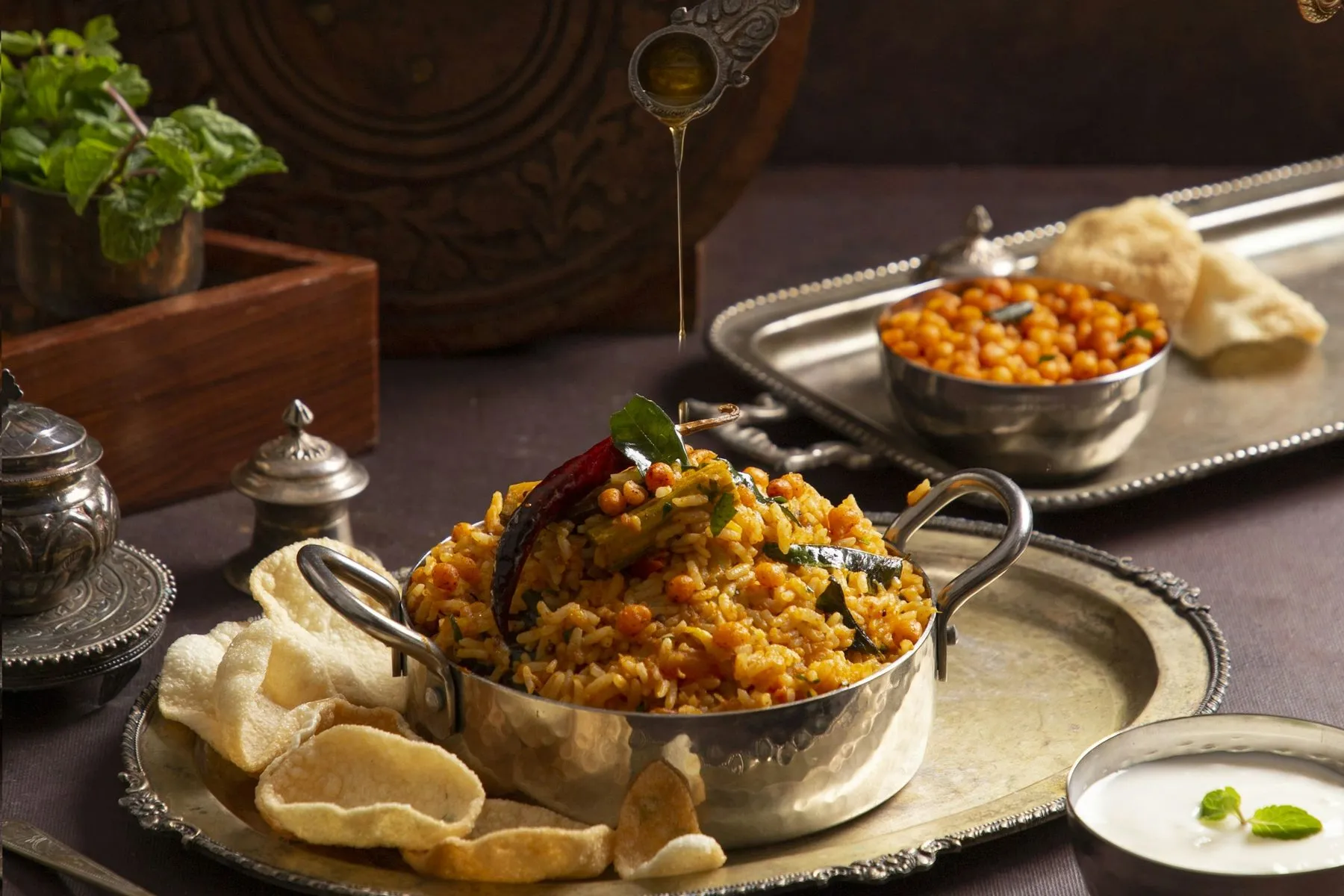
Steel pot of spiced rice-and-lentil dish topped with a dried chili, with ghee being poured from a spoon, papads, boondi and a bowl of yogurt
Photo: Perspective Studio on Unsplash · photo shows a similar dish

Bisi bele bath is a hearty rice and lentil dish from Karnataka. The name means roughly "hot lentil rice" in Kannada: rice and toor dal are cooked soft, then simmered with vegetables, tamarind and a fragrant roasted spice powder until thick and porridge-like.

It is a complete meal in one bowl. The homemade spice powder makes the biggest difference, but a store-bought bisi bele bath powder works for a quicker version.

Why this recipe works

  • Freshly roasted and ground spice powder with coriander, dals, cinnamon and dried coconut gives the dish its signature aroma.
  • Cooking the rice and dal very soft lets them melt into a creamy, spoonable base.
  • A ghee tempering with cashews and curry leaves added at the end brings richness and crunch.

Bisi Bele Bath recipe

By The JollyRoses Kitchen · 1 hr 55 min total · Medium

Ingredients

Servings 4

For the spice powder

For the rice and dal

For the vegetables

For the tempering

Equipment

  • Large heavy-bottomed pot
  • Medium pot (or a pressure cooker)
  • Small dry skillet
  • Spice grinder
  • Small skillet for tempering

Instructions

  1. Roast and grind the spice powder

    Heat the oil in a small skillet over medium-low heat. Roast the chana dal, urad dal, coriander, cumin, peppercorns, fenugreek, cinnamon, cloves and red chilies, stirring, until the dals are golden and the spices smell toasty, 4–5 minutes. Add the coconut and stir until lightly browned, about 1 minute. Cool and grind to a fine powder.

  2. Cook the dal

    Drain the soaked toor dal and put it in the medium pot with 2½ cups of the water and the turmeric. Bring to a boil, skim any foam, then simmer partly covered until the dal is completely soft and mashable, 30–35 minutes. Add hot water if it gets too thick.

  3. Cook the rice

    While the dal cooks, put the rice and the remaining 2½ cups of water in the large pot. Bring to a boil, then simmer partly covered, stirring now and then, until the rice is very soft, 20–25 minutes.

  4. Cook the vegetables

    Add the vegetables, shallots, tomato and a splash of water to the soft rice. Simmer until the vegetables are tender, 8–10 minutes.

  5. Combine and season

    Mash the dal and stir it into the rice and vegetables. Add the tamarind water, jaggery, salt and 3–4 tablespoons of the spice powder. Simmer over low heat, stirring often so it does not stick, for 8–10 minutes. Add hot water to keep a loose, porridge-like consistency.

  6. Temper and serve

    Heat the ghee in a small skillet. Fry the cashews until golden, then add the mustard seeds. When they pop, add the dried chili, curry leaves and asafoetida. Pour over the bisi bele bath, stir and serve hot.

Tips for the best bisi bele bath

  • Keep it looser than you think. Bisi bele bath thickens a lot as it stands, so it should look slightly runny in the pot.
  • Roast the spice powder ingredients slowly over medium-low heat; burnt dals or chilies make the whole dish bitter.
  • With a pressure cooker, cook the rice, dal, turmeric and 4 cups of water together for 4–5 whistles, then continue from the vegetable step.
  • The extra spice powder keeps in an airtight jar for about a month; use it for your next batch.
  • Many packaged asafoetida blends contain wheat flour; use a gluten-free brand or leave it out if needed.

Substitutions

Homemade spice powder3–4 tablespoons store-bought bisi bele bath powder, sold at Indian grocery stores.
GheeNeutral oil or coconut oil for a vegan version.
Toor dalMasoor dal (red lentils), which cooks faster in about 20 minutes.
Dried coconut3 tablespoons fresh grated coconut, ground with the roasted spices and a little water into a paste just before adding. Use it the same day.

Storing and reheating

Cool quickly and refrigerate in a shallow covered container within 1 hour (never more than 2 hours). Eat within 3 days. It thickens a lot in the fridge, so stir in hot water while reheating until steaming hot and loose again.

What to serve with bisi bele bath

  • Cucumber Raita
  • Potato chips or boondi
  • Papad or fried appalam
  • Sliced onion with lemon

Frequently asked questions

What does bisi bele bath mean?
In Kannada, bisi means hot, bele means lentil and bath (or bhath) refers to a rice dish, so the name describes a hot lentil rice.
What is the difference between bisi bele bath and sambar rice?
Both combine rice, dal and vegetables. Bisi bele bath uses its own spice powder with cinnamon, cloves and dried coconut, giving it a warmer, more aromatic flavor, while sambar rice uses sambar powder.
Can I use store-bought bisi bele bath powder?
Yes. Use 3–4 tablespoons and adjust to taste, since brands vary in heat and salt.
Why did my bisi bele bath become too thick?
Rice and dal keep absorbing liquid as they sit. Stir in hot water until it is loose again, and cook it slightly runnier than you want it at the table.
Is bisi bele bath vegan?
It is vegetarian because of the ghee. Use oil for the tempering to make it vegan.

Rate this recipe

Made it? Tap a star to rate — no sign-up needed.

Reviews

No reviews yet.

Sign in to write a review and share a photo of your bisi bele bath.

You might also like

All indian rice