South Indian Breakfast · South Indian

Plain Dosa with Homemade Batter

A dosa recipe from scratch: soak, grind and ferment rice and urad dal into dosa batter, then cook thin, crisp dosas on cast iron or nonstick.

By The JollyRoses Kitchen · Updated
Prep
30 min
Cook
50 min
Total
18 hr 20 min
Serves
6
Vegan Medium Main Course Includes 17 hr hands-off
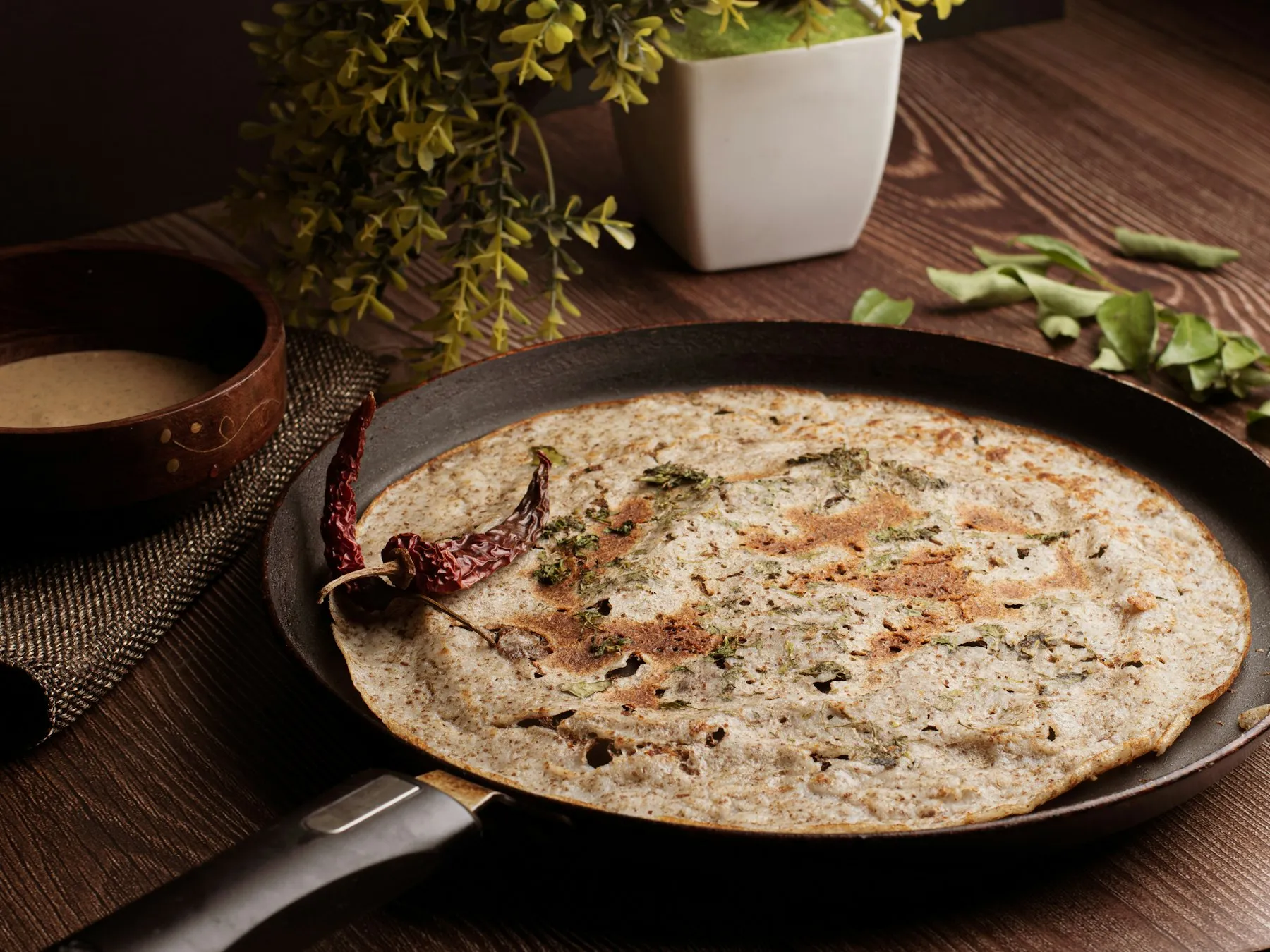
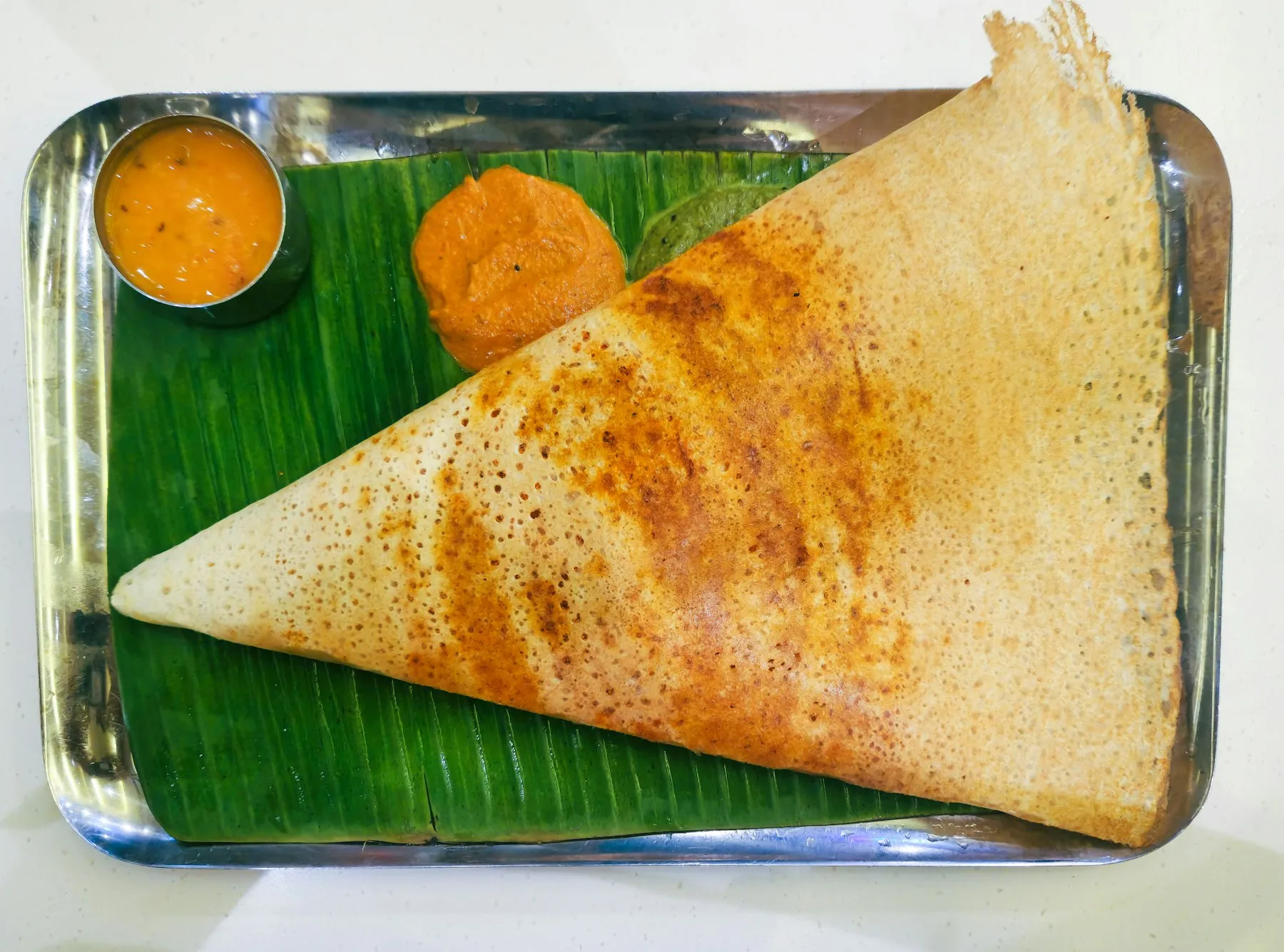
Large triangular crisp dosa on a banana leaf in a steel tray, with sambar and a red chutney
Photo: Zoshua Colah on Unsplash

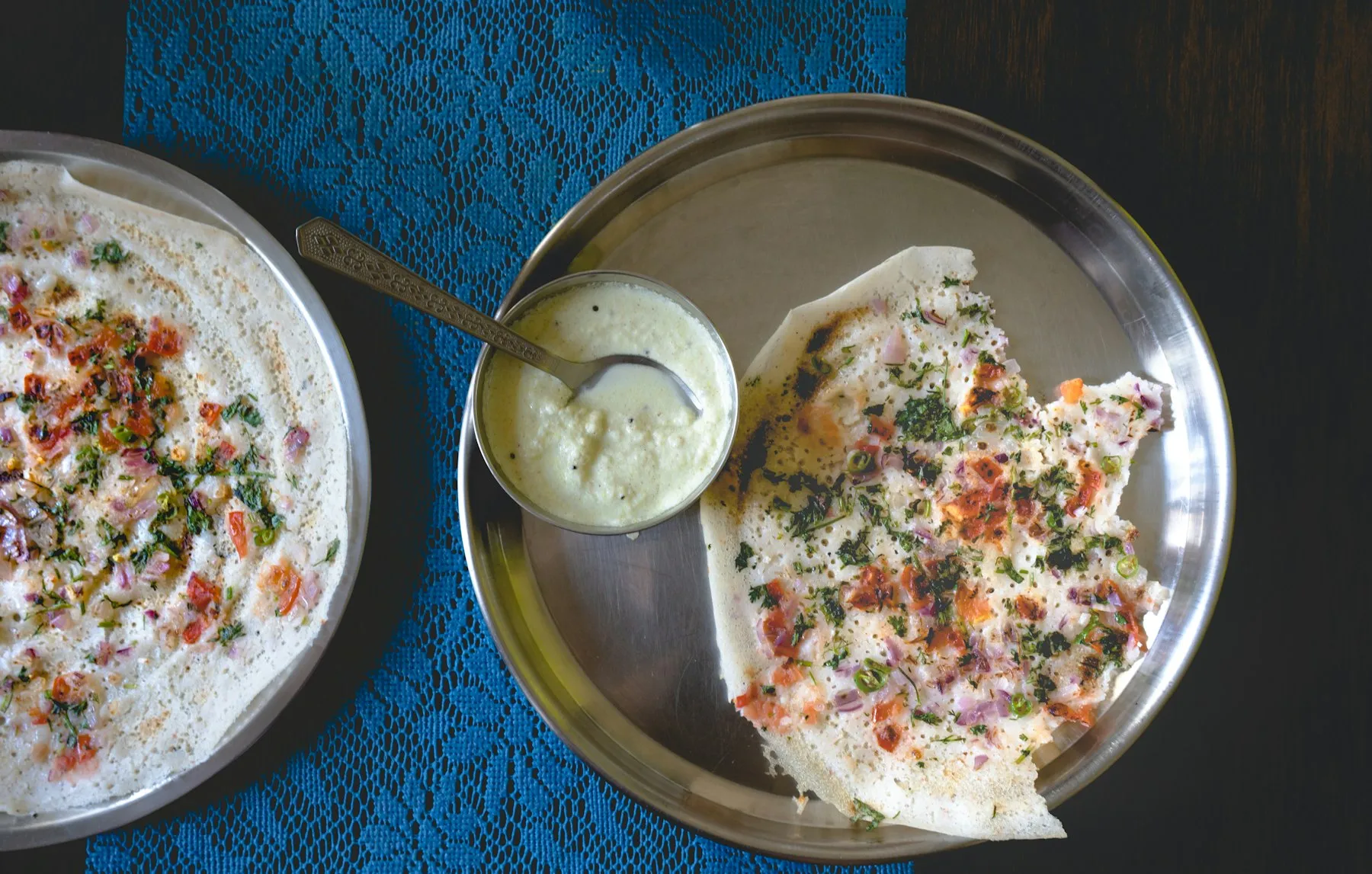
Dosa is a thin, crisp South Indian crepe made from a fermented batter of rice and urad dal. This recipe covers both parts: the dosa batter, which you make a day ahead, and cooking golden dosas on a hot griddle.

The batter makes about 18–20 medium dosas and keeps in the fridge for several days, so one batch covers a few breakfasts. The same batter is used for masala dosa and uttapam.

Why this recipe works

  • A 3:1 ratio of rice to urad dal, plus fenugreek and an optional spoonful of chana dal, gives dosas that crisp up well and brown evenly.
  • Mixing regular and parboiled rice balances crispness with a batter that is easy to spread.
  • Separate instructions for cast-iron and nonstick pans, since they need different heat handling.
  • One batter, several uses: plain dosa, masala dosa and uttapam.

Plain Dosa with Homemade Batter recipe

By The JollyRoses Kitchen · 18 hr 20 min total · Medium

Ingredients

Servings 6

For the dosa batter

For cooking

Equipment

  • Wet grinder or high-powered blender
  • Large bowl or container (at least twice the volume of the batter)
  • Cast-iron or nonstick griddle (tawa) or large flat skillet, 10–12 inch
  • Ladle with a flat round bottom
  • Thin flexible spatula

Instructions

  1. Rinse and soak

    Rinse both rices together in several changes of water and cover with fresh water. In a second bowl, rinse the urad dal, chana dal and fenugreek seeds and cover with water. Soak both for 4–6 hours. If using poha, rinse it and add it to the rice for the last 30 minutes.

  2. Grind the dal

    Drain the dal mixture and grind with about ¾ cup of the cold water, added a little at a time, until completely smooth and fluffy, 10–15 minutes in a wet grinder or 3–4 minutes in short bursts in a blender. Transfer to the large bowl.

  3. Grind the rice

    Drain the rice and poha and grind with about 1 cup cold water until smooth with only a very fine grain. Dosa batter should be smoother than idli batter. Add it to the dal batter.

  4. Mix and ferment

    Add the salt and mix the batters thoroughly. Cover loosely and leave in a warm spot, ideally 80–90 °F (27–32 °C), for 8–14 hours, or longer in a cool kitchen. It is ready when it has risen, looks bubbly and smells pleasantly sour.

  5. Adjust the consistency

    Stir the fermented batter gently. Scoop out what you need for this meal and refrigerate the rest. Thin the portion with a little water until it flows off the ladle like heavy cream; thick enough to coat the ladle, thin enough to spread easily.

  6. Heat the pan

    Cast iron: heat over medium-high until a few drops of water sizzle and evaporate in seconds, then rub the surface with a halved onion dipped in a little oil. Nonstick: heat over medium only, without letting the empty pan get smoking hot, and wipe with a few drops of oil.

  7. Spread the dosa

    Pour about ⅓ cup batter into the center. Using the bottom of the ladle, spread it quickly in a spiral from the center outward into a thin round. Work fast on cast iron; batter that sets before you finish spreading means the pan is too hot.

  8. Cook until crisp

    Drizzle about ½ teaspoon oil over and around the dosa. Cook until the underside is golden and the edges lift from the pan, 1½–3 minutes depending on thickness. Flipping is optional; for a soft dosa, flip and cook 30 seconds. Fold and serve.

  9. Reset between dosas

    Before each new dosa, sprinkle a few drops of water on a cast-iron pan to bring the temperature down slightly and wipe with the onion. On nonstick, wipe with a damp paper towel or take it off the heat for a few seconds so the batter spreads instead of clumping.

Tips for the best plain dosa with homemade batter

  • Cast iron gives the crispest, most evenly browned dosas once well seasoned. The first one or two often stick while the pan settles to the right temperature; that is normal.
  • Nonstick is easier for beginners, but do not preheat it empty on high heat. Keep it at medium and avoid aerosol cooking spray, which builds a sticky residue.
  • If batter tears or sticks on cast iron, the pan is under-seasoned or too cool. Wipe on a thin film of oil, heat well, and try again.
  • Batter too thick gives soft, pancake-like dosas; too thin and it runs and will not crisp. Adjust with a tablespoon of water or a spoon of unthinned batter at a time.
  • Cold kitchen: ferment in the oven with only the light on, or on the low yogurt setting of an electric pressure cooker. Judge readiness by rise and sour smell, not time.

Substitutions

Parboiled riceAll regular raw rice (3 cups total). Dosas will be crisp but the batter can be slightly harder to spread.
Making batter from scratchReady-made idli/dosa batter from an Indian grocery store; thin it a little before cooking.
Neutral or sesame oilGhee for a richer, buttery dosa (no longer vegan).
Chana dalLeave it out; the dosas will be a little paler.

Storing and reheating

Refrigerate fermented batter in a covered container as soon as it is ready and use within 4–5 days; it becomes more sour each day, and slightly sour batter is ideal for uttapam. Discard it if it smells unpleasant or alcoholic, turns pink or grey, or shows any mold. Stir before using and bring a portion to room temperature for easier spreading. Cooked dosas are best eaten fresh; they soften on standing.

What to serve with plain dosa with homemade batter

Frequently asked questions

What is the ratio of rice to urad dal for dosa batter?
This recipe uses 3 parts rice to 1 part urad dal by volume, a common ratio for crisp dosas. Some cooks go up to 4:1 for even crisper results.
Why is my dosa sticking to the pan?
Usually the pan is too cool or not seasoned enough, or it is a nonstick pan that has been overheated. Heat cast iron until water sizzles, wipe with oil, and on nonstick keep the heat at medium.
Why is my dosa not crispy?
Batter that is too thick, a pan that is not hot enough, or too little oil are the common causes. Thin the batter slightly and spread it as thinly as you can.
Can I use the same batter for idli and dosa?
Yes, many households use one batter for both. Idlis are softest from a slightly thicker batter with more urad dal, while dosas crisp best from a smoother, thinner batter.
How long does dosa batter last in the fridge?
About 4–5 days in a covered container. It gets more sour as it ages; discard it if it smells unpleasant, turns pink or grey, or shows mold.

Rate this recipe

Made it? Tap a star to rate — no sign-up needed.

Reviews

No reviews yet.

Sign in to write a review and share a photo of your plain dosa with homemade batter.

You might also like

All south indian breakfast
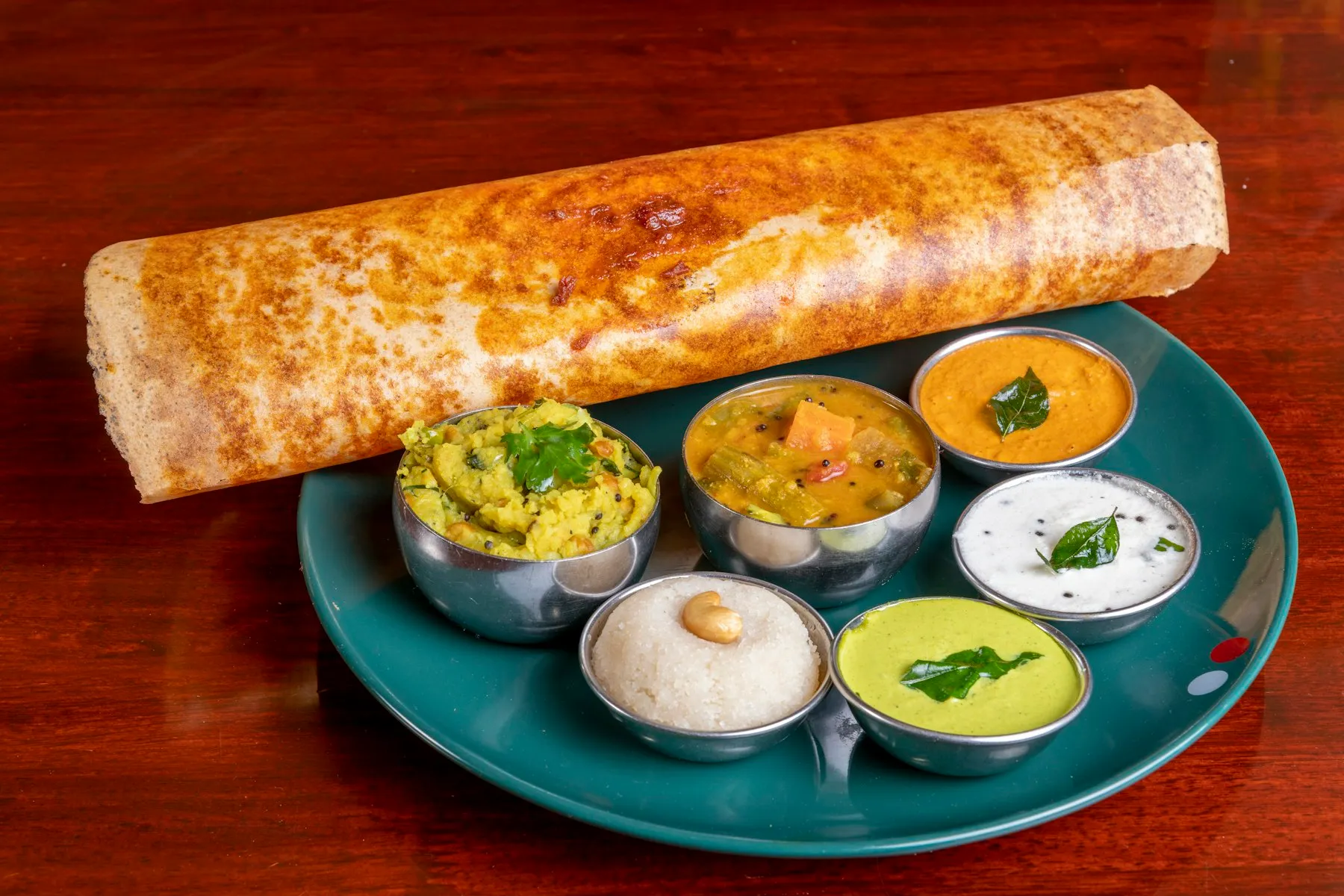
Rolled golden dosa on a teal plate with small steel bowls of potato masala, sambar and chutneys
VeganSouth Indian

Masala Dosa

18 hr 30 min Medium Serves 5
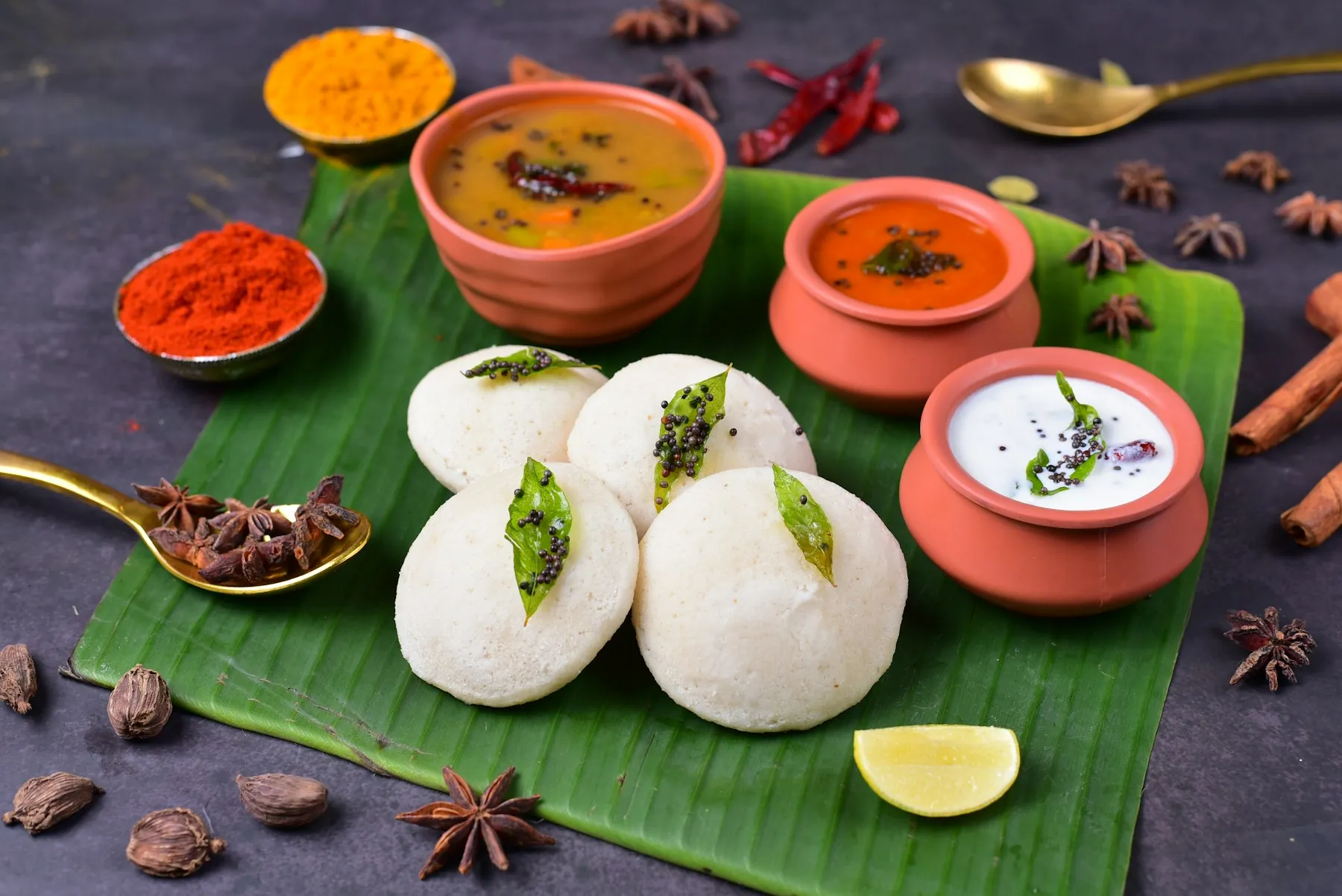
Idlis topped with curry leaves on a banana leaf, with terracotta bowls of sambar, chutney and yogurt and scattered whole spices
VeganSouth Indian

Soft Idli

18 hr 10 min Medium Serves 6