South Indian Breakfast · South Indian

Rava Upma

An easy upma recipe: roasted semolina simmered with a mustard-seed and curry-leaf tempering and vegetables. Soft, lump-free and ready in about 30 minutes.

By The JollyRoses Kitchen · Updated
Prep
10 min
Cook
20 min
Total
30 min
Serves
3
Vegan Easy Main Course
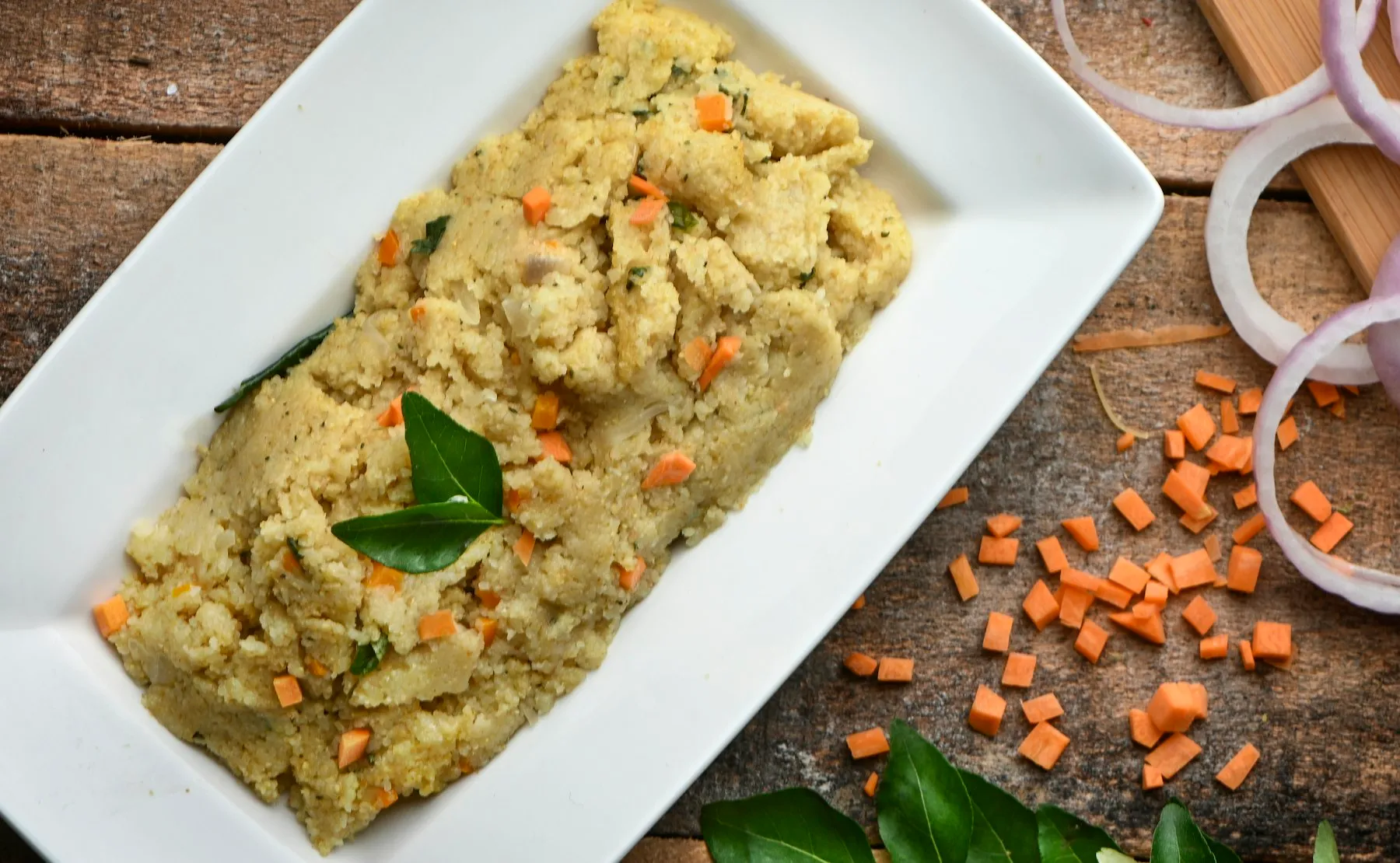
White rectangular plate of semolina upma with diced carrots and curry leaves, with onion rings and chopped carrot beside it
Photo: Mario Raj on Unsplash

Rava upma is a savory, porridge-like dish made from semolina (wheat rava or sooji) cooked in seasoned water. Look for rava at Indian grocery stores; plain, unflavored farina such as cream of wheat is a close substitute. It is not a rice dish, but it is one of the most common breakfasts in South Indian homes, often eaten alongside idli, dosa or a cup of coffee.

Three things decide whether upma turns out soft or gluey: roasting the rava until fragrant, using about 2½ cups of water per cup of rava, and adding the rava to boiling water in a slow stream while you stir.

Why this recipe works

  • Dry-roasting the semolina first keeps the grains separate and gives a light, nutty flavor.
  • A tempering of mustard seeds, two dals, curry leaves and ginger adds crunch and aroma in every spoonful.
  • Pouring the rava into boiling water while stirring constantly prevents lumps.
  • Made with oil, it is fully vegan; a spoon of ghee at the end is optional.

Rava Upma recipe

By The JollyRoses Kitchen · 30 min total · Easy

Ingredients

Servings 3

For the upma

For the tempering and vegetables

Equipment

  • Heavy-bottomed pan or kadai with lid
  • Wooden spoon or spatula
  • Kettle or small saucepan for boiling water

Instructions

  1. Roast the rava

    Put the semolina in a dry heavy-bottomed pan over medium-low heat. Stir often for 5–6 minutes until it smells toasty and the grains look dry and free-flowing; it should stay pale, not brown. Tip it onto a plate and wipe out the pan.

  2. Heat the water

    Bring the water to a boil in a kettle or small saucepan and keep it hot. Using boiling water in the next step stops the rava from clumping.

  3. Temper the spices

    Heat the oil in the same pan over medium heat. Add the mustard seeds; when they crackle, add the urad dal, chana dal and cashews (if using) and stir until golden, about 1 minute. Add the curry leaves, ginger and green chilies and stir for a few seconds.

  4. Cook the vegetables

    Add the onion and cook until soft and translucent, 2–3 minutes. Add the carrot and peas and cook for another 2 minutes.

  5. Add the water

    Carefully pour in the hot water, then add the salt and the pinch of sugar (if using). Bring back to a rolling boil and taste; the water should be slightly saltier than you want the finished dish.

  6. Stir in the rava

    Turn the heat to low. Add the roasted rava a little at a time in a thin stream with one hand while stirring continuously with the other. Keep stirring until all the water is absorbed and the mixture thickens, about 1–2 minutes.

  7. Steam and finish

    Cover and cook on the lowest heat for 3–4 minutes so the grains swell fully. Turn off the heat, stir in the cilantro and lemon juice (if using), fluff gently and serve hot.

Tips for the best rava upma

  • Start with 2½ cups of water per cup of fine rava. Use 2 cups for a firmer, crumbly upma and up to 3 cups if you like it soft and spoonable; coarse rava may need a little more.
  • Never dump the rava in all at once. Adding it slowly to boiling water while stirring is the single best way to avoid lumps.
  • Upma firms up as it cools. Serve it straight away, or splash in a little hot water and stir to loosen leftovers.
  • Roast a larger batch of rava and store it airtight once cool; it shortens the cook time on busy mornings.
  • Taste the water for salt before adding the rava, since it is hard to season evenly afterward.

Substitutions

Fine semolina (rava)Unflavored farina or cream of wheat, or a coarser semolina with an extra ¼ cup water.
OilGhee for a richer flavor (the dish is then no longer vegan).
Carrot and peasDiced green beans, bell pepper or chopped tomato, or leave the vegetables out for a plain upma.
CashewsRoasted peanuts, or skip them.

Storing and reheating

Upma is best eaten fresh. Cool and refrigerate leftovers in a covered container within 2 hours and eat within 2 days. Reheat with a sprinkle of water, covered, in a pan or microwave until steaming hot.

What to serve with rava upma

Frequently asked questions

What is upma made of?
Classic rava upma is made from semolina (rava or sooji), which is a wheat product, cooked in water with a tempering of mustard seeds, dals, curry leaves, ginger and green chilies, often with onions and vegetables.
What is the ratio of rava to water for upma?
About 1 cup of fine rava to 2½ cups of water gives a soft, moist upma. Use 2 cups for a drier texture or up to 3 cups for a very soft one.
Why does my upma get lumpy?
Lumps form when the rava hits water that is not boiling, or when it is added too fast. Roast the rava first, keep the water at a rolling boil and pour the rava in slowly while stirring constantly.
Is upma gluten-free?
No. Semolina is made from durum wheat, so rava upma contains gluten. For a gluten-free breakfast, try pongal, idli or pesarattu instead.
Can I use cream of wheat for upma?
Yes. Plain, unflavored cream of wheat or farina is a finely ground wheat product, similar to fine semolina, and works well. Avoid instant or flavored packets.

Rate this recipe

Made it? Tap a star to rate — no sign-up needed.

Reviews

No reviews yet.

Sign in to write a review and share a photo of your rava upma.

You might also like

All south indian breakfast
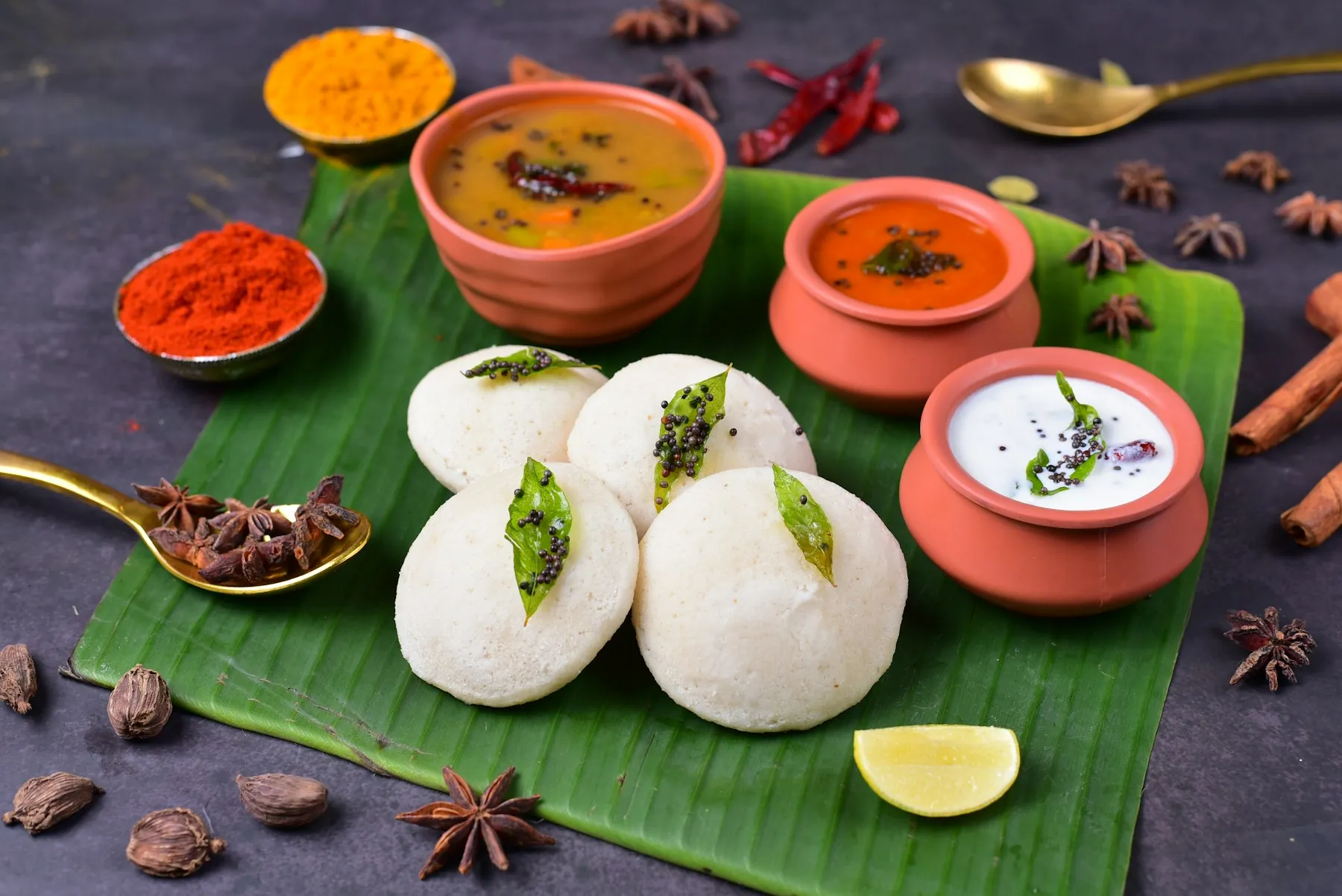
Idlis topped with curry leaves on a banana leaf, with terracotta bowls of sambar, chutney and yogurt and scattered whole spices
VeganSouth Indian

Soft Idli

18 hr 10 min Medium Serves 6