Dals & Curries · North Indian

Kadhi Chawal (Punjabi Kadhi Pakora)

Kadhi chawal: tangy Punjabi yogurt and besan curry with soft onion pakoras, served over basmati rice. Includes tips to keep the yogurt from curdling.

By The JollyRoses Kitchen · Updated
Prep
20 min
Cook
1 hr
Total
1 hr 50 min
Serves
4
Vegetarian Medium Main Course Includes 30 min hands-off
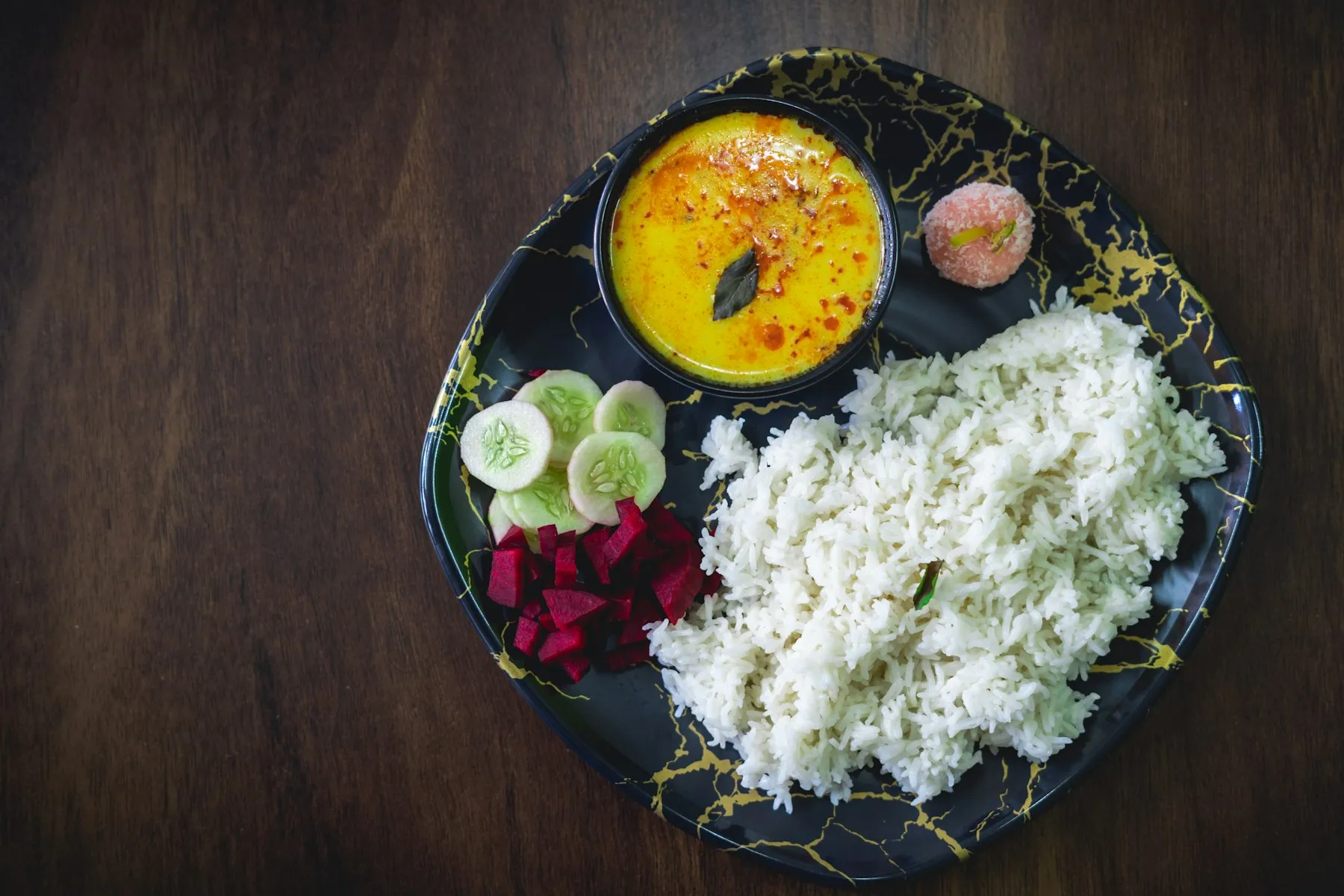
Black plate with a bowl of yellow kadhi, steamed rice, cucumber and beetroot slices and a small sweet
Photo: fuseviews on Unsplash

Kadhi chawal is a Punjabi comfort meal: kadhi, a tangy curry of yogurt thickened with besan (chickpea flour), poured over steamed rice (chawal). The Punjabi version, kadhi pakora, is simmered for a long time until thick and comes with soft onion fritters soaked in the curry.

The one thing that can go wrong is curdling. Whisking the besan into the yogurt before it touches the heat, and stirring constantly until it boils, keeps the kadhi smooth. The steps explain exactly when to stir and when to salt.

Why this recipe works

  • Besan whisked into cold yogurt and water before heating protects the yogurt from splitting.
  • A long, slow simmer cooks out the raw taste of the besan and gives a silky, thick kadhi.
  • Onion pakoras fried crisp, then rested in the hot kadhi, turn soft and soak up the flavor.
  • A final tempering of ghee, cumin, fenugreek and red chilies adds color and aroma.

Kadhi Chawal (Punjabi Kadhi Pakora) recipe

By The JollyRoses Kitchen · 1 hr 50 min total · Medium

Ingredients

Servings 4

For the kadhi

For the pakoras

For the tempering (tadka)

For the rice (chawal)

Equipment

  • Large heavy-bottomed pot (at least 4 quart)
  • Whisk
  • Deep pan or wok for frying
  • Instant-read or deep-fry thermometer
  • Slotted spoon
  • Small pan for the tempering
  • Medium saucepan with a tight-fitting lid (for the rice)

Instructions

  1. Whisk the kadhi base

    In the large pot, before it goes on the heat, whisk the yogurt until completely smooth. Add the besan and whisk until no lumps remain, then whisk in the water a little at a time. Add the turmeric, ginger and green chilies. Do not add salt yet.

  2. Bring to a boil, stirring constantly

    Set the pot over medium heat and stir continuously, scraping the bottom, until the kadhi comes to a full boil, about 10 minutes. Do not walk away or stop stirring during this stage; this is what keeps the yogurt from curdling.

  3. Simmer slowly

    Once it boils, add the salt, reduce the heat to low and simmer uncovered for 30–40 minutes, stirring every few minutes. The kadhi will thicken, turn glossy and lose its raw flour taste. If it gets thicker than heavy cream, whisk in a little hot water.

  4. Make the pakora batter

    While the kadhi simmers, mix the besan, onion, green chili, ajwain, chili powder, salt and baking soda (if using) in a bowl. Add water gradually and mix to a thick batter that coats the onions and drops from a spoon in clumps.

  5. Fry the pakoras

    Heat about 2 inches of oil in a deep pan to 350 °F (175 °C). Drop in tablespoon-size spoonfuls of batter, without crowding, and fry for 4–5 minutes, turning, until deep golden and cooked through. Drain on paper towels.

  6. Cook the rice

    Drain the soaked basmati. Bring 2¼ cups water and the salt to a boil in the saucepan, add the rice, stir once and return to a boil. Cover tightly, reduce to the lowest heat and cook for 12 minutes, then rest off the heat, covered, for 10 minutes. Fluff with a fork.

  7. Add the pakoras

    About 5 minutes before serving, add the pakoras to the hot kadhi, simmer for 2–3 minutes and turn off the heat so they soften and soak up the curry. For crisper pakoras, add them just before serving instead.

  8. Temper and serve

    Heat the ghee in a small pan over medium heat. Add the cumin and fenugreek seeds and fry until the cumin crackles and the fenugreek turns golden (not dark), about 30 seconds. Add the dried chilies and curry leaves, take the pan off the heat and stir in the chili powder. Pour over the kadhi. Serve ladled over mounds of rice.

Tips for the best kadhi chawal (punjabi kadhi pakora)

  • To keep yogurt from curdling: use room-temperature yogurt, whisk the besan in completely before heating, stir constantly until the kadhi boils, and add salt only after it has boiled. Once boiled with the besan, the kadhi is stable.
  • Slightly sour yogurt gives the best flavor. If your yogurt is mild, use yogurt that is a few days old, or add a squeeze of lemon juice at the end. Do not leave yogurt out at room temperature for hours to sour it.
  • Do not rush the simmer. Undercooked kadhi tastes of raw flour and stays thin.
  • Check the oil temperature for the pakoras. Oil that is too cool gives greasy pakoras; too hot and they brown before the center cooks.
  • Fenugreek seeds turn bitter if they burn, so take the tempering off the heat as soon as they are golden.

Substitutions

Whole-milk yogurtLow-fat plain yogurt, which works but is more likely to split; be especially careful to stir constantly until it boils.
Ghee in the temperingNeutral oil.
Onion pakorasPakoras made with sliced potato or chopped spinach in the same batter, or skip the pakoras for a lighter plain kadhi.
Deep fryingAir-fryer pakoras: shape the batter into small patties on oiled parchment, spray with oil and air-fry at 375 °F (190 °C) for 10–12 minutes, turning once. They will be drier but soften well in the kadhi.

Storing and reheating

Refrigerate kadhi and rice in separate airtight containers within 2 hours of cooking (aim for 1 hour for the rice). Eat both within 3 days. The pakoras soften further on standing. Reheat kadhi gently over low heat, stirring, with a splash of water, until steaming hot; reheat rice until steaming hot throughout. Freezing is not recommended, as the texture becomes grainy.

What to serve with kadhi chawal (punjabi kadhi pakora)

  • Jeera Rice
  • Steamed basmati rice
  • Aloo jeera or any dry potato sabzi
  • Papad and pickle

Frequently asked questions

How do you keep kadhi from curdling?
Whisk the besan into room-temperature yogurt and water before heating, so the flour helps stabilize the yogurt. Then stir constantly over medium heat until the kadhi comes to a boil, and add salt only after it has boiled.
What is kadhi chawal?
Kadhi chawal is kadhi, a tangy yogurt and chickpea-flour curry, served over chawal, or steamed rice. In Punjab it is usually made as kadhi pakora, with onion fritters in the curry.
What is the difference between Punjabi kadhi and Gujarati kadhi?
Punjabi kadhi is thick, sour and spicy, simmered for a long time and served with pakoras. Gujarati kadhi is thinner, lightly sweet and usually made without pakoras.
Why is my kadhi thin?
It usually needs a longer simmer, or more besan. Simmer uncovered until it coats a spoon. If it is still thin, whisk 1–2 tablespoons of besan into a little water and stir it in, then simmer for 10 minutes more.
Is kadhi gluten-free?
Kadhi made with besan, yogurt and spices is naturally gluten-free. Asafoetida (hing), which some cooks add to the tempering, usually contains wheat flour, so skip it or use a gluten-free brand.

Rate this recipe

Made it? Tap a star to rate — no sign-up needed.

Reviews

No reviews yet.

Sign in to write a review and share a photo of your kadhi chawal (punjabi kadhi pakora).

You might also like

All dals & curries
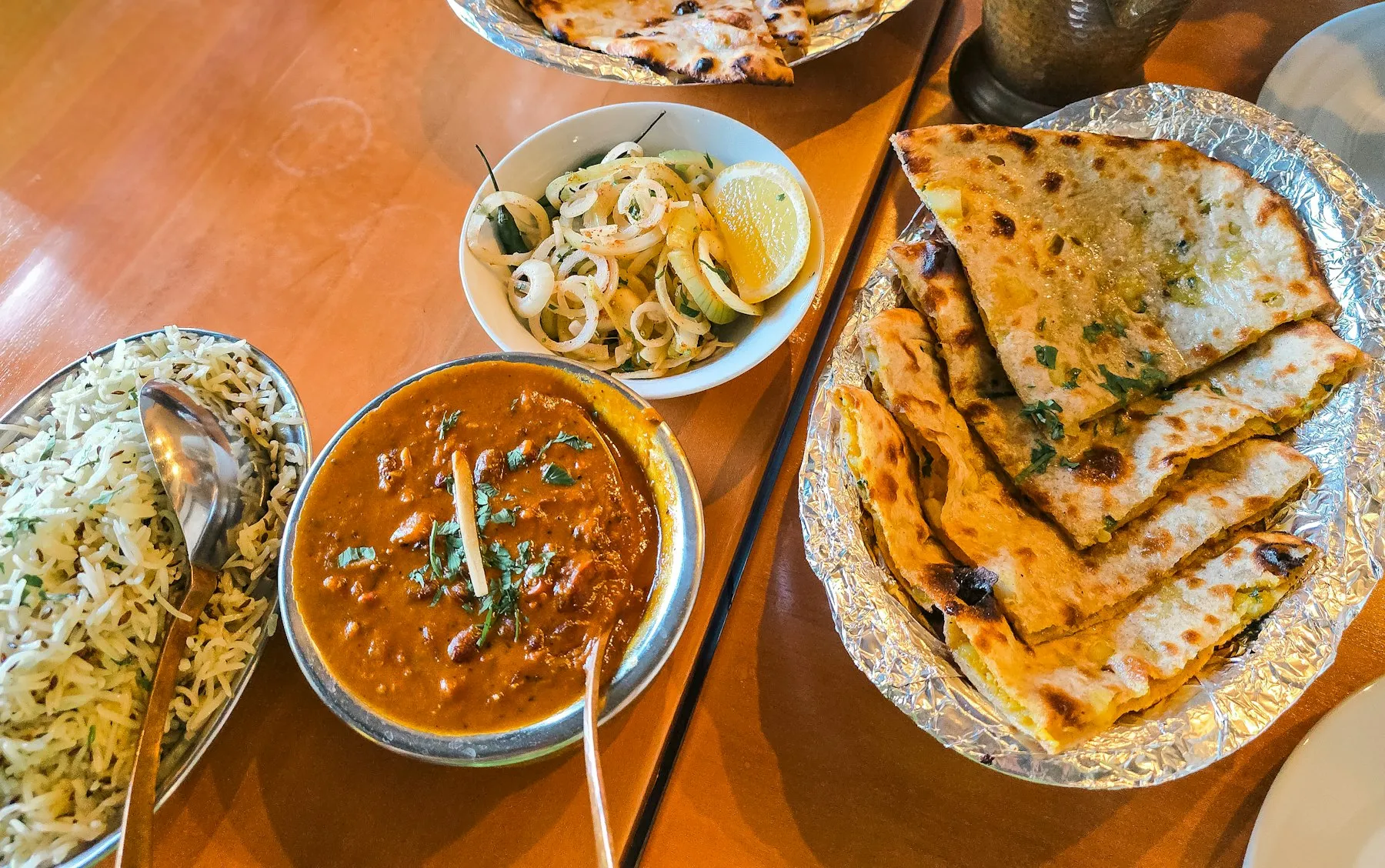
Steel bowl of dark dal makhani with jeera rice, stuffed flatbread and an onion salad on a restaurant table
VegetarianNorth Indian

Dal Makhani

11 hr 5 min Medium Serves 6
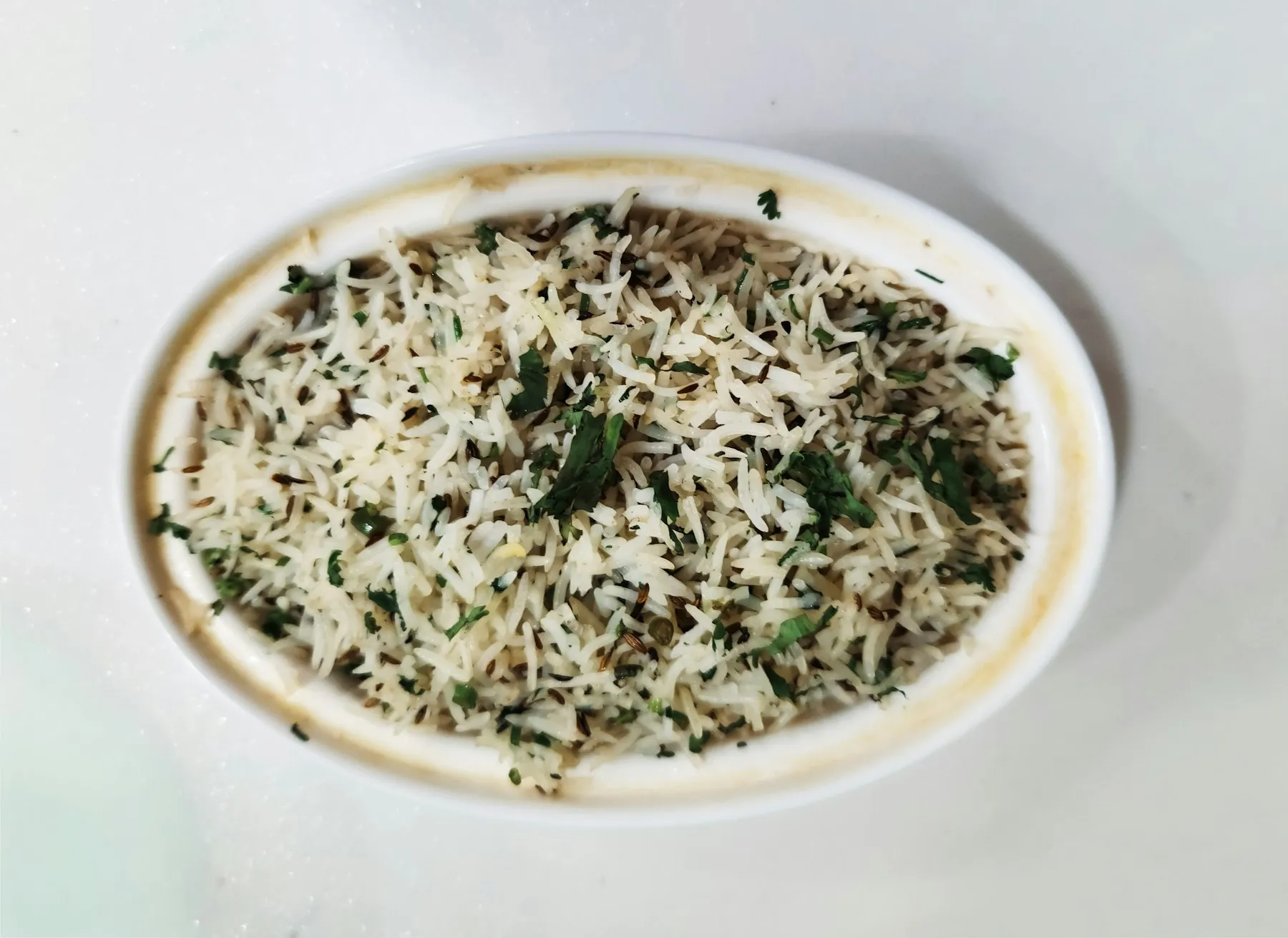
White oval dish of basmati rice flecked with cumin seeds and chopped cilantro
VegetarianNorth Indian

Jeera Rice

1 hr 5 min Easy Serves 4